
Serbia Student Protest Impact Forces Aleksandar Vucic to Concede Historic Election Defeat as Youth Movement Takes Power
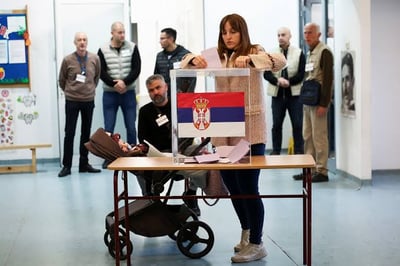
The powerful impact of youth street protests has completely rewritten the political history of Serbia after the country's long serving strongman leader, Aleksandar Vucic, appeared on national television to openly concede defeat in a general election. The stunning admission came barely ninety minutes after voting booths closed across the European nation, ending the fourteen year political rule of his party and handing an unexpected majority to a leaderless student opposition coalition. Within moments of the live broadcast, tens of thousands of cheering citizens flooded into the historic squares of the capital city, honking car horns, waving national flags, and dancing through the avenues to celebrate a democratic transformation that almost no established political expert had thought possible.
The victory of the young demonstrators marks one of the most remarkable moments of grassroots people power in modern European politics. Aleksandar Vucic, who had dominated the country as prime minister and president through strict control of state television and public offices, admitted that the newly formed student movement had defeated his ruling Serbian Progressive Party by a wide margin. Official preliminary counts showed the student coalition securing more than two million votes to claim between one hundred and thirty-five and one hundred and forty seats in the two hundred and fifty member national parliament. In contrast, the ruling party managed to retain only about one hundred and five seats, leaving the former leadership completely unable to assemble a governing majority.
The deep roots of this political earthquake lie directly in the anger and sorrow generated by an avoidable infrastructure tragedy that took place at a newly renovated railway station. Public fury exploded across the country when a massive concrete canopy collapsed over passengers waiting outside the central train station in Novi Sad, killing sixteen people and severely injuring several others. Instead of treating the catastrophe as an isolated accident, university students and ordinary citizens pointed directly to deep rooted official corruption, secret construction deals, and careless building inspections carried out by companies closely tied to the ruling establishment. For many families who lost children and loved ones on that morning, the collapse became an unforgivable symbol of how government dishonesty directly threatened human lives.
Following the station disaster, university students organized what would become the largest and most persistent wave of street demonstrations seen in the nation for a quarter century. Rather than relying on traditional opposition political parties that had repeatedly failed to defeat the ruling administration, the youth formed independent student assemblies across major university campuses. Week after week, tens of thousands of young demonstrators blocked major traffic highways, staged peaceful sit ins outside government ministries, and marched through rainfall and winter cold to demand full administrative accountability and justice for the sixteen victims. The continuous demonstrations exposed the inability of the state machinery to silence a movement that carried no individual leader and demanded nothing more than honest governance and the rule of law.
The physical impact of these long protests reshaped everyday life and created an atmosphere of open defiance across Serbian towns. In the heart of Belgrade, pro government loyalty groups had set up fortified tent camps and wire fences in a central public park for over a year to intimidate critics and protect government buildings. Immediately following the concession speech by the outgoing leader, triumphant crowds marched to that central park and quickly tore down the barricades and dismantled the tents with their bare hands, reclaiming the public ground for everyday citizens. Family members of the railway collapse victims were seen weeping in the middle of the crowd, telling local news reporters that they had spent two long years waiting for this exact evening so that everyone responsible for the tragedy could finally face real judicial justice.
What made the student movement unique and unstoppable was its complete rejection of traditional political games. Recognizing that ordinary voters were deeply tired of career politicians and party infighting, the students decided that not a single university student would place their personal name on the actual ballot. Instead, the youth movement built an election list made up entirely of respected school teachers, agricultural farmers, medical doctors, cultural artists, and university professors who had never held government positions. This creative approach destroyed the government propaganda narrative that the protests were merely a power grab by ambitious youth, allowing the movement to present itself as a clean, honest, and truly independent voice of everyday working families.
The impact of the protests also broke through the heavy information blockade maintained by the state run media. Because national television channels refused to broadcast fair reports about the student demonstrations and routinely labeled the protesters as foreign agents, the young volunteers took their message directly to the doorsteps of ordinary people. Using simple bicycles, local passenger trains, and walking journeys on foot, thousands of student volunteers traveled into remote rural villages and small factory towns that had supported the ruling party for more than a decade. They sat with elderly grandmothers and farming families, speaking in simple, respectful language about rising grocery prices, neglected local clinics, and the loss of young talent leaving the country. That personal outreach broke the fear barrier in rural communities, driving historic voter turnout that election observers noted had not been witnessed since the democratic revolution in the year two thousand.
The international effect of this citizen victory is already creating waves across the European continent. For years, European diplomats had watched Aleksandar Vucic navigate between Western institutions and close relationships with eastern powers, while gradually tightening control over the domestic press and national courts. The sudden collapse of his ruling system under peaceful student pressure demonstrates that autocratic methods can be overcome when public dissatisfaction turns into organized community voting. Political analysts point out that the Serbian youth victory closely mirrors similar political changes in neighboring countries, offering a working model for youth and labor movements across the wider region that are protesting against rising economic inequality and decaying public systems.
As night turned into morning across Belgrade, university professors and student organizers addressed celebrating crowds from their simple campaign headquarters, declaring that the voice of the people had finally triumphed over state fear. However, student organizers were quick to remind the celebrating citizens that winning an election is only the first step in a very difficult rebuilding process. The incoming coalition of teachers, farmers, and community leaders must now take charge of state institutions that were hollowed out by years of partisan loyalty, restore judicial independence to criminal courts, and launch transparent investigations into the deadly station collapse without descending into personal revenge.
The remarkable fall of Aleksandar Vucic stands as living proof of what sustained, peaceful community protest can achieve in the face of immense state power. A generation of young citizens who were told that their voices did not matter proved that collective courage and honest civic dedication could bring an entrenched political machine to its knees. For the people of Serbia, the long days of street blockades and police tear gas have finally opened the door to an era where government authority is answerable to its citizens rather than the other way around.