
Assam Flood Inundation Threat Escalates as Rains Raise Death Toll to Eighty Nine and Displace Thousands Across Five Districts
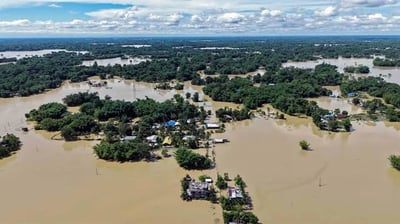
The human toll of the relentless monsoon season in Assam deepened significantly on Wednesday as heavy overnight rains swept across low lying areas, creating widespread fear of fresh waterlogging and river overflows. Officials from the Assam State Disaster Management Authority confirmed that two additional casualties were registered over the past twenty four hours, with one death reported in Sivasagar district and another in Golaghat district. These latest fatalities have brought the total flood related death toll in the state to eighty nine since the onset of the current monsoon cycle. More than one hundred twenty two thousand residents across five districts remain severely impacted by the deluge, with families forced to flee inundated homes as swelling water bodies encroach upon villages, agricultural fields, and major transportation corridors. The situation remains especially delicate along the banks of the Dhansiri river, where water levels at Numaligarh in Golaghat district continue to surge well beyond critical danger marks, prompting local authorities to issue urgent public safety advisories directing residents to maintain a safe distance from rising riverbanks.
Sivasagar district has emerged as the most severely impacted region in the ongoing wave of flooding, accounting for nearly sixty thousand affected individuals who are currently grappling with submerged homes, contaminated water sources, and disrupted electrical infrastructure. Neighboring Charaideo district follows closely behind with over thirty one thousand people affected, while Jorhat district has reported nearly twenty thousand residents facing severe hardships due to relentless riverine surges. The sudden intensity of Tuesday evening downpours also triggered intense urban flooding across Jorhat town, completely submerging prominent residential neighborhoods, commercial hubs, and government administrative complexes despite the urban center lying outside the primary riverine overflow zone. Localities including Tarun Phukan Road and Tarajan experienced rapid water accumulation that left motorists stranded, flooded ground floor residences, and severely disrupted commercial activities. This double blow of urban waterlogging and rural river swells has placed unprecedented strain on emergency response teams who are working around the clock to assist stranded populations.
To mitigate the expanding humanitarian emergency, local district administrations have operationalized fifty five relief camps and emergency distribution centers across four affected districts, providing temporary shelter and essential provisions to nearly eighteen thousand displaced citizens. Medical teams, public health personnel, and veterinary specialists have been deployed directly into flood zones alongside emergency search and rescue personnel to deliver critical medical care, distribute clean drinking water, and prevent potential outbreaks of waterborne diseases among sheltered populations. Beyond the immediate threat to human life, the environmental and economic damage across rural Assam is reaching staggering proportions. Official disaster management reports indicate that over fifteen thousand hectares of active agricultural land have been completely submerged under floodwaters, destroying standing crops and jeopardizing the livelihoods of thousands of farming families. Additionally, more than twenty six thousand domestic animals and livestock have been directly affected, requiring urgent fodder distribution and specialized veterinary interventions.
The physical infrastructure across eastern Assam has sustained extensive damage due to the structural stress caused by persistent water pressure and strong river currents. Multiple river embankments, designed to protect rural settlements from seasonal swelling, have developed major breaches, allowing fast flowing water to wash through agricultural tracts and residential colonies. Public roadways, vital bridge connections, educational institutions, and rural healthcare centers have suffered widespread destruction or remain inaccessible under several feet of water, severely crippling communication networks between rural outposts and district headquarters. In response to the intensifying disaster, Union Health Minister JP Nadda scheduled an official high level visit to the flood affected zones to directly assess the extent of the damage, inspect relief camp operations, and review long term rehabilitation measures alongside state government leadership. Central authorities are coordinating closely with the Assam state administration to ensure smooth supply chains for essential medicines, sanitation kits, and financial relief funds allocated to support affected households.
As meteorologists forecast continued rainfall activity across several parts of the northeastern region over the coming days, community members and disaster response personnel remain on high alert for further river bank erosions and flash flooding events. State disaster response forces, alongside national relief organizations, have deployed rubber boats and amphibious vehicles to maintain continuous access to cut off hamlets, ensuring that emergency food rations and lifesaving supplies reach the most vulnerable populations. The state government has also initiated preliminary assessments to address long term erosion challenges and embankment repairs once water levels begin a sustained retreat. For the tens of thousands of displaced citizens currently staying in temporary relief shelters, the immediate priority remains basic survival and waiting for river waters to recede so they can return to rebuild their damaged homes and farmlands. The unfolding crisis serves as a stark reminder of the escalating climate challenges facing the region, where intense seasonal rainfall patterns continue to test the limits of public infrastructure and emergency management systems.