
Nepal Pushes India and China to Join Forces Against Escalating Himalayan Climate Disasters
Nepal is calling on its two powerful neighbors, India and China, to unite around a common goal: fighting the growing danger of climate disasters in the Himalayan mountains. Even though New Delhi and Beijing remain bitter geopolitical rivals with tense border disputes, both countries share the same fragile mountain range that supplies water and weather patterns to nearly two billion people across Asia.
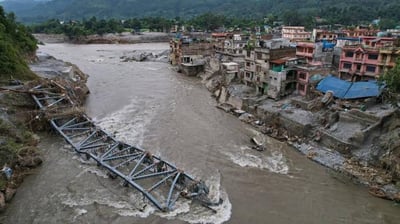
The urgent push comes after a series of massive weather emergencies crushed mountain villages, destroyed major dams, and washed away entire highways. Rising temperatures are heating the Himalayas faster than the global average, melting high altitude glaciers and creating giant, unstable lakes trapped behind fragile mud and rock barriers. When these natural barriers burst, millions of gallons of water rush downstream, destroying everything in their path regardless of political boundaries.
Nepal took its plea directly to the international community at the United Nations General Assembly. During his global address in New York, Nepalese Prime Minister Balendra Shah proposed a formal Himalayan Climate Resilience Mechanism jointly led by Nepal, India, and China. He pointed out that rising water, runaway mudslides, and collapsing ice do not carry passports or care about international border lines.
The proposed agreement asks the three nations to share critical satellite data, track risky glacier lakes, build shared early warning alarms, and help each other when disaster strikes. Right now, when heavy rain or flash floods hit the high peaks, downstream communities often receive zero advance warning simply because neighboring countries keep their hydrological data private due to national security concerns.
Scientists call this vast snowy region the Third Pole because it holds more frozen water than anywhere else on Earth outside the North and South Poles. The melting snow feeds ten major river systems, including the Ganges, Indus, Brahmaputra, and Yangtze. If these rivers run dry in hot seasons or violently overflow during monsoons, farms will fail and factories will shut down across India, Pakistan, Bangladesh, and China.
Local people in Nepal feel trapped in an unfair situation. The tiny mountain nation produces almost none of the carbon pollution causing global warming, yet it suffers some of the worst impacts on earth. Over recent weeks, catastrophic flooding claimed thousands of lives and wiped out billions of dollars in basic roads, power lines, and family homes.
Bringing India and China together remains a massive challenge. The two giants have fought armed skirmishes along their high mountain borders and maintain hundreds of thousands of soldiers in the area. Mutual suspicion runs high, and military leaders frequently worry that sharing geographic or river information could expose defense secrets.
Yet Nepali leaders argue that environmental destruction poses an even bigger threat than military conflict. Officials in Kathmandu insist that if China and India cannot sit down to cooperate on saving mountain ecology, both countries will face severe water shortages and unstoppable natural disasters that no army can fight off.