
BJP Arunachal Pradesh Government Faces Heavy Backlash Over Harsh Crackdown and Costly PR Drive on Massive Siang Dam
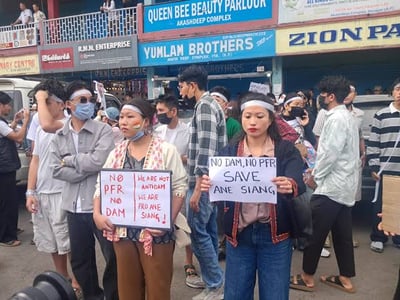
The Bharatiya Janata Party led state government in Arunachal Pradesh has come under severe public criticism for using forceful methods to suppress tribal protests against the proposed eleven thousand two hundred megawatt Siang Upper Multipurpose Project. Rather than listening to the deep worries of indigenous villagers who fear losing their homes and ancestral lands, the state administration has responded with heavy police crackdowns, preventive detentions, internet blackouts, and social media blocks. Community leaders and rights defenders argue that the ruling government is working overtime to silence local voices while spending large amounts of public money on image building.
Local opposition to the massive hydropower structure has grown rapidly across the Siang river valley, bringing thousands of indigenous people onto the streets. Villagers from the Adi community point out that building such a giant concrete dam will drown dozens of ancestral settlements, destroy rich agricultural fields, and wipe out their historical identity. Despite these genuine human concerns, the Pema Khandu led administration has treated the public resistance as a law and order threat, deploying central paramilitary forces and using tear gas shells on demonstrators who were simply asking the government to protect their river.
Instead of choosing genuine dialogue with worried indigenous farmers, the BJP administration invoked strict preventive detention laws to lock up prominent youth leaders and activists. Several local representatives who spoke against the survey work were detained under tough security acts that make getting bail extremely hard. This heavy-handed action triggered widespread anger across multiple districts, resulting in shutdown calls where markets remained closed and transport came to a complete halt as people protested against state intimidation.
The crackdown has also extended into the digital space, where the state machinery has moved aggressively to cut off information. Authorities shut down mobile internet services in sensitive areas like Upper Siang to keep people from gathering or sharing updates with the outside world. At the same time, social media pages of local news channels and independent reporters covering the ground protests were blocked under orders from the administration, leading to strong protests from working journalist unions who called the action an assault on press freedom.
While spending state energy on arresting activists and blocking local reporters, the government cleared a massive public relations campaign worth nearly eleven crore rupees to reshape public opinion. Critics pointed out the clear double standard of spending huge amounts of public funds to hire private public relations agencies to sell the project while ordinary villagers were suffering without basic healthcare, roads, or education. Social media feeds were flooded with paid promotional videos downplaying local fears and painting anti-dam protesters in a negative light.
The high-handed response was not limited to the hills of Arunachal Pradesh. When indigenous youth and student groups gathered outside Arunachal Bhavan in the national capital to hold a peaceful gathering, police moved in quickly, detaining dozens of young demonstrators. Protesters who were dragged into police buses later shared distressing accounts of being physically manhandled and denied access to legal help for hours, showing that the ruling dispensation was determined to prevent the issue from gaining national attention.
Environmental researchers and water experts have repeatedly warned that building a giant hydropower project in a fragile Himalayan earthquake zone is dangerous. The Siang river basin is known for high geological instability, heavy monsoon floods, and sudden landslides. Local communities argue that changing the natural flow of the river not only threatens their survival but also increases disaster risks for downstream populations living in Assam. Yet, these ecological warnings continue to be ignored by planners who prioritize commercial power generation over public safety.
The growing public anger has created political trouble for the ruling party from within its own ranks. Several local party leaders and grassroots workers in places like Pasighat have voiced their open discomfort, warning that supporting the project against the will of their own people could destroy public trust and ruin future electoral prospects. Many local party functionaries acknowledge that forcing a dam upon an unwilling tribal community without their consent goes against basic democratic governance.
For the families living along the Siang river, the struggle remains a fight to protect their ancestral home and natural heritage. Community forums have stated clearly that no amount of public relations spin, police presence, or administrative pressure will force them to give up their land. As local groups demand the immediate release of all detained protesters and an end to security force deployment, the crisis stands as a sharp example of how pushing mega projects without public trust harms the democratic fabric of border regions.