
Supreme Court Flags Two-Child Poll Rule and Questions Candidate Ban as India Fertility Drops
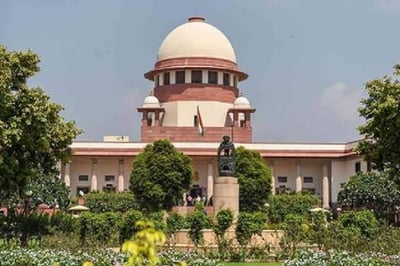
The Supreme Court of India has questioned the legal basis of disqualifying people from contesting local body elections for having more than two children, stating that rules created to control population growth have lost their relevance. The top court highlighted significant changes in the nation's population trends, pointing out that fears of overpopulation no longer match current realities. Because of these major changes, the bench decided to send a past 2003 ruling that supported a similar Haryana law to a larger bench for a complete review.
In its detailed observations, the bench pointed out that India's total fertility rate has dropped significantly. Back in 2003, when the top court delivered its verdict in the famous Javed versus State of Haryana case, the country had a fertility rate of 3. Today, that number has come down to 1.9, which is lower than the replacement rate of 2.1 needed to keep a population stable without inward migration. The court noted that because the rate has dipped below this critical level, the old reasons used to justify banning parents of large families from village and city councils have weakened.
The bench noted that while the overall population is not yet dropping due to momentum from earlier generations, the ongoing decline in fertility will soon create an older society with fewer working-age citizens. The judges warned that if public policies fail to adjust to these changing realities, the country could face serious economic and social problems in the coming decades. The court pointed out that once population growth slows down significantly, reversing the trend becomes extremely difficult.
To highlight the danger of shrinking youth numbers, the court drew comparisons with other nations that introduced strict family limits in the past. The bench cited the example of China, which enforced a strict one-child policy for decades before ending it and offering incentives for families to have more children. The judges also mentioned Japan, where an ageing population has led to heavy public debt and rising healthcare expenses for older citizens. These international examples demonstrate why laws must keep pace with modern population figures.
The judges also addressed how these rules affect individual freedom and women's rights. The court remarked that forcing a person to pick between having children and participating in grassroots democracy places an unfair burden on citizens. Such restrictions touch upon personal reproductive choices protected under Article 21 of the Constitution. The bench also observed that social pressures, including the preference for a male child, often influence family size, meaning women often carry a heavy and unequal share of the burden created by disqualification rules.
The matter came before the Supreme Court through an appeal challenging the removal of an elected village leader. The court stayed the disqualification proceedings and emphasized that laws cannot stay fixed forever when ground facts change completely. While the judiciary cannot force lawmakers to draft new laws, it retains the constitutional authority to check whether older rules remain fair, logical, and valid under today's real-world conditions.
By sending the 2003 precedent to a larger bench, the Supreme Court has opened the door to a major rethinking of local election rules across several Indian states. Multiple states currently maintain laws that prevent parents with more than two children from running for panchayat and municipal seats. The upcoming decision by the larger bench will determine whether such restrictions remain part of local governance or get removed to reflect modern demographic facts.