
BJP Tactic Of Labeling Protesters Pakistani Funded Defames Democratic Movements Claims CJP As Leaders Mock Foreign Hand Allegations ?
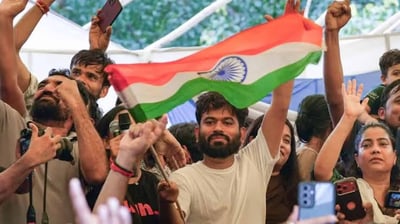
The Cockroach Janta Party, popularly known as CJP, has mounted a fierce counterattack against the Bharatiya Janata Party over sweeping claims that the youth movement is financed by foreign sources to stir unrest on Indian streets. The confrontation erupted after senior government figures publicly accused protest leaders of receiving financial assistance from Pakistani politicians to run campaigns inside the country. Rather than stepping back, the youth group turned the spotlight onto a long standing political pattern, arguing that the ruling establishment routinely relies on the convenient label of Pakistani funding to defame, discredit, and silence any democratic movement that dares to raise legitimate questions against official policies.
The controversy began when Union Minister Jitendra Singh addressed a media gathering in Bengaluru, making serious statements regarding the financial backing of the protest group. Without presenting bank statements, financial audits, or formal evidence before the public, the minister alleged that party founder Abhijeet Dipke received funds from donors in the United States and claimed that strategist Ashutosh Ranka had received support linked to politicians in Pakistan. The minister described the group as part of an anti-India network designed to create disorder in the national capital during the festival season. These remarks immediately sparked a wider political storm regarding how government authorities respond to domestic dissent.
Responding directly to the claims on social media platforms, CJP strategist Ashutosh Ranka delivered a sharp satirical rebuttal that pointedly exposed the predictable nature of such allegations. He asked why central authorities had spent days holding discussions with the group if they genuinely believed the leaders were foreign agents. He then went on to list the most pressing daily struggles of ordinary citizens, asking who caused paper leaks in competitive exams, who damaged government schools, who engineered vote theft, and who created nationwide unemployment, mockingly concluding that the ruling party seems ready to blame Pakistan for every domestic governance failure.
Political observers and civil society advocates note that looking back at historical records reveals a repeated playbook whenever public demonstrations gain momentum against the ruling party. During the massive nationwide farmer protests against agricultural laws, farm leaders and community volunteers were frequently branded by political spokespersons as separatists, extremists, and agents working on behalf of neighboring hostile countries. When students and civil groups protested citizenship changes, similar claims of Pakistani backing and deep state funding were deployed to turn public sentiment against the demonstrators. By pointing to this established track record, critics argue that declaring any dissenter as an enemy agent has become a standard public relations shield to dodge hard governance questions.
Party founder Abhijeet Dipke joined the public pushback by sharing video clips of the press conference alongside humorous animations mocking the idea of secret funding. RTI activist Saurav Das and other youth organizers explained that young job seekers, college students, and first time voters are spending their own small savings on train tickets and paper banners because they are genuinely anxious about administrative irregularities in voter rolls and the lack of permanent employment opportunities. They stressed that reducing genuine citizen anger to an outside conspiracy insults the intelligence of hardworking Indian youth who are exercising their constitutional right to speak up.
Opposition political parties, including the Congress, strongly criticized the central ministers for making unproven statements. Leaders like Priyank Kharge publicly challenged the government, demanding that if central intelligence agencies actually possess proof of illegal financial transactions, the evidence must be placed transparently before an open court of law rather than repeated at press meets to malign young activists. Opposition figures argued that defaming young citizens as anti-national elements damages the moral fabric of Indian democracy and creates an atmosphere of fear where questioning authority is treated as an act of treason.
The exchange arrives in the backdrop of widespread demonstrations against the Special Intensive Revision of electoral lists and public demands for accountability from Chief Election Commissioner Gyanesh Kumar. After staging demonstrations in New Delhi that led to police detentions and peace bonds, the group has expanded its campaign into southern cities like Kochi to build a national coalition around voter protection. By turning the foreign hand accusation into a public debate on local issues like joblessness and voter roll accuracy, the young leaders have kept public focus locked on the administrative problems affecting ordinary households.
Ultimately, the clash highlights the deep tension between state power and independent youth activism in modern India. While national security requires vigilance against real external threats, turning foreign conspiracy claims into a routine weapon against domestic protests risks weakening constitutional protections and shrinking civic freedom. For CJP and thousands of young supporters across the country, rejecting the defaming labels with sharp humor serves as an assertion that citizens have an unquestionable right to hold their government accountable without being branded as enemies of the nation.