
Brij Bhushan Sharan Singh Acquitted By Delhi Court In Wrestlers Sexual Harassment Case
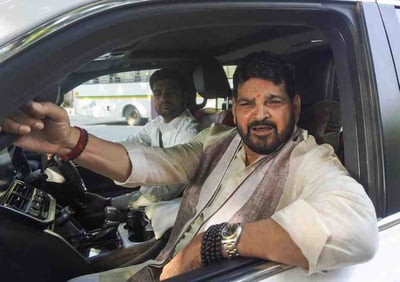
On August 3, 2026, the Rouse Avenue Court in Delhi delivered a historic and widely anticipated judgment that marks a major turning point in 1 of the most high profile legal sagas in Indian sports history. Additional Chief Judicial Magistrate Ashwani Panwar formally acquitted former Wrestling Federation of India president Brij Bhushan Sharan Singh and former assistant secretary Vinod Tomar of all criminal charges, including sexual harassment, outraging the modesty of women, stalking, and criminal intimidation. The long awaited decision brought an end to trial court proceedings that had gripped the nation for over 3 years. In its ruling, the court observed that the prosecution version suffered from unexplained delays in lodging complaints, noticeable inconsistencies, and material contradictions regarding key dates and locations. The magistrate highlighted that the post incident conduct of the complainants made the allegations difficult to accept at face value under the high evidentiary standards required in criminal law. For the former federation chief, who had consistently proclaimed his innocence since the initial outbreak of allegations, the verdict delivered an immediate court clearance, effectively bringing a legal victory to a case that had transformed into a major political and administrative battleground.
The journey to this verdict began in January 2023, when several of India top Olympic and international grapplers took to the streets of New Delhi to launch a dramatic public demonstration at Jantar Mantar. Led by world renowned wrestlers such as Vinesh Phogat, Sakshi Malik, and Bajrang Punia, the protesting athletes accused the federation leadership of systemic abuse, improper physical contact, and intimidation spanning a 10 year period between 2012 and 2022. The allegations stated that unwanted advances occurred at various venues, including national camps, official federation residences, and international competition trips abroad. Initial interventions by the Sports Ministry and the formation of an oversight committee failed to resolve the standoff, leading the athletes to resume their sit in protest in April 2023. The crisis reached its peak when the complainants approached the Supreme Court of India, which directed the Delhi Police to register criminal cases. Consequently, 2 FIRs were registered at Connaught Place police station on April 28, 2023, setting off a formal criminal investigation into the highest offices of Indian wrestling management.
As the investigation unfolded, the Delhi Police submitted a comprehensive chargesheet running over 1500 pages in June 2023, detailing statements from multiple witnesses, official travel records, and tournament documentation. The court framed charges against Brij Bhushan Sharan Singh under Sections 354, 354A, and 506 of the Indian Penal Code regarding complaints filed by 5 adult female athletes, while discharging 1 complaint due to insufficient evidence. A separate case registered under the Protection of Children from Sexual Offences Act involving a minor complainant was closed by the court in May 2025 after the minor athlete and her father formally withdrew their allegations during police inquiry. The trial formally commenced in July 2024 through in camera proceedings to safeguard the privacy of the victims. Over the course of nearly 2 years of intense courtroom debate, the prosecution presented 32 witnesses, including the complaining wrestlers, federation employees, and Sports Authority of India officials, aiming to establish a consistent pattern of inappropriate behavior and institutional pressure.
Throughout the legal battle, the defense team relentlessly challenged the credibility of the accusations, emphasizing that key incidents were reported 7 to 8 years after their alleged occurrence without any contemporaneous administrative complaints. Defense attorneys argued that the timing of the allegations pointed toward a deliberate conspiracy engineered by rival factions to wrest control of the national sports body. Conversely, senior advocates representing the women athletes maintained that the immense power imbalance between a dominating sports administrator and young wrestlers from rural backgrounds explained the delayed reporting. They argued that fear of career retaliation and administrative exile naturally prevented young athletes from speaking out immediately. The ultimate acquittal underscores the strict evidentiary requirements of Indian criminal jurisprudence, where reasonable doubt and factual variance outweigh narrative claims. This stark legal outcome draws attention to the structural vulnerabilities faced by athletes when attempting to seek justice against well entrenched federation leaders, emphasizing the persistent gap between institutional power dynamics and legal standards of proof.
The pronouncement of the verdict sparked immediate, contrasting responses from both sides involved in the legal fight. Speaking outside the Rouse Avenue Court complex shortly after the judgment was handed down, Brij Bhushan Sharan Singh expressed deep relief and joy, reiterating his initial statement that he would accept the ultimate punishment if a single charge were proven true in a court of law. On the other hand, the wrestling community reacted with profound disappointment and emotional anguish. Complainant Vinesh Phogat publicly expressed deep sorrow over the decision, asserting that the systemic support extended to the accused throughout the legal journey hindered their quest for accountability. Despite the setback at the trial court level, the legal team representing the athletes confirmed plans to file an appeal before the Delhi High Court. While this ruling concludes a momentous chapter in trial court, the broader dialogue surrounding sports governance, internal oversight mechanisms, and the protection of national athletes remains an ongoing and vital conversation across the country.