
China Reacts Sharply As Quad Joins Hands For Mega Fiji Port Project And Global Trade Security
The geopolitical landscape of the Indo Pacific region has witnessed a significant shift following the high level Quad Foreign Ministers Meeting in New Delhi. Chaired by Indian External Affairs Minister S Jaishankar alongside US Secretary of State Marco Rubio, Australian Foreign Minister Penny Wong, and Japanese Foreign Minister Toshimitsu Motegi, the grouping unveiled concrete strategies to secure global trade routes and develop regional infrastructure. The most prominent highlight of this meeting is the historic announcement of the first ever joint port infrastructure venture by the Quad in Fiji. Backed by financial commitments including an immediate budget support package, this project directly addresses the inadequate port capacity in the Pacific Islands. This move serves as a practical alternative to state backed investment models that smaller island nations have relied on previously, changing the dynamics of maritime logistics and regional connectivity in the South Pacific corridor.
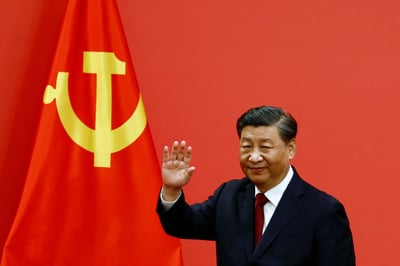
This massive infrastructure push has triggered an immediate and sharp diplomatic response from Beijing. Chinese Foreign Ministry spokesperson Mao Ning stated that cooperation between nations should promote peace and stability rather than targeting a third party, explicitly voicing opposition to the creation of exclusive small cliques and bloc confrontation. The friction stems from the fact that Fiji had previously explored shipbuilding and port modernization discussions under alternative global economic frameworks. By actively pivoting toward the Quad for strategic port development, the island nation has signaled a preference for transparent, transparently funded, and resilient regional partnerships. This shift disrupts traditional economic monopolies and creates a competitive environment where smaller nations gain greater leverage to choose their developmental partners based on long term economic sustainability rather than debt traps.
Simultaneously, the Quad is rapidly advancing its security capabilities through the Indo Pacific Partnership for Maritime Domain Awareness. India has successfully operationalized the Indian Ocean Region program through its Information Fusion Centre in Gurugram, aiming to build a unified Common Operational Picture across vast maritime stretches. This advanced surveillance network is designed to track dark shipping, illegal fishing, and unannounced naval movements, drastically reducing the space for coercive or unilateral activities in disputed waters. While the Quad maintains that these measures are purely defensive and intended to guarantee the freedom of navigation under international law, the highly synchronized monitoring setup naturally limits the absolute operational freedom of any expanding naval power. The strategy effectively replaces passive diplomatic statements with real time tracking technology, transforming how maritime security is managed across critical global choke points.
Beyond maritime boundaries, the alliance has extended its reach into the industrial roots of modern technology by introducing a massive twenty billion dollar Critical Minerals Initiative Framework. Parallel to this, India and the United States signed a standalone bilateral agreement to secure supply chains for rare earth elements essential for semiconductors, defense equipment, and green energy technologies. This economic policy coordination aims to diversify global mining, processing, and recycling networks, explicitly addressing the current high concentration of mineral processing capabilities. By building reliable, alternative supply channels, the alliance seeks to insulate global industries from sudden export restrictions or trade blockades. This multi layered approach proves that the alliance has evolved from a simple diplomatic dialogue into a robust executive apparatus, combining infrastructure loans, advanced satellite tracking, and resource security to balance power dynamics across the world stage.