
CJP Leaders Saurav Das And Ashutosh Ranka Move Delhi High Court Challenging Judicial Custody Over Jantar Mantar Demonstration
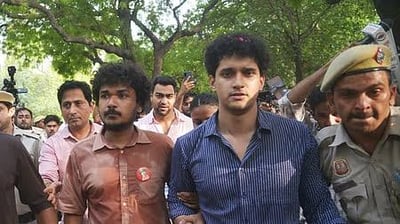
A major legal fight over the right to peaceful protest has reached the Delhi High Court after two prominent youth activists challenged their continuous detention by local authorities. Saurav Das and Ashutosh Ranka, co-convenors of the youth-led Cockroach Janta Party, filed urgent legal petitions before the high court questioning the decisions of an executive magistrate that kept them locked in jail. The petitions argue that preventive detention rules are being misused by law enforcement to suppress political dissent and punish citizens simply for speaking out in public spaces. The case has quickly caught the attention of human rights defenders, opposition leaders, and legal observers who view the proceedings as an important test of personal freedom in the national capital.
The trouble began when Das and Ranka joined a protest at Jantar Mantar, a location in central Delhi that has served as a gathering ground for public demonstrations for several decades. The activists gathered at the spot to raise questions regarding irregularities in the special revision of electoral rolls and to protest against recent restrictions that removed Jantar Mantar as a designated protest zone. Police officials detained the two leaders after they allegedly scaled a locked perimeter gate to enter the area, unfurl the national flag, and raise slogans against election authorities. Instead of releasing them on standard bail, police took the activists before a Special Executive Magistrate, who placed them under preventive detention.
The legal dispute escalated sharply when the magistrate repeatedly refused to release the activists from jail custody. Authorities claimed the two youth leaders had earlier signed good behavior bonds promising to maintain public order, and that their entry into the restricted protest zone was a clear violation of that promise. When supporters and family members came forward to submit surety bonds to secure their release, the magistrate rejected the surety guarantees on technical grounds, pointing to mismatched photographs and questioning the background of the people standing surety. As a result, the magistrate extended their judicial remand, directing that both young men remain behind bars.
In their comprehensive petitions moved before the Delhi High Court, the activists pointed out serious procedural flaws in how their custody orders were passed. The petition contends that under the newly enforced criminal laws, authorities cannot reject a surety arbitrarily unless an individual is found completely unfit through a clear inquiry. Furthermore, the lawyers argued that the magistrate failed to state essential legal details, such as the exact amount of the bond, the required number of sureties, or the duration of the guarantee, rendering the custody orders arbitrary and legally invalid.
A deeper constitutional concern raised in the high court challenge targets the very nature of executive magistrates who handle preventive detentions. Unlike independent judges appointed to the formal judicial branch, Special Executive Magistrates are administrative officers appointed by the government and often work closely with the police. Legal representatives pointed out that having executive officials decide on preventive jail terms violates the long-standing rule that no authority should be a judge in its own cause. The lawyers argued that sending citizens to jail without formal criminal charges or regular trial oversight turns preventive laws into an instrument of executive harassment.
The controversy has also generated intense friction among administrative officers handling the bail matter. During earlier proceedings, the presiding executive magistrate complained of receiving threats from unidentified individuals, prompting the registration of a police complaint and leading to the magistrate being abruptly replaced before the final extension of custody was issued. Leaders of the Cockroach Janta Party responded by claiming that administrative delays were being deliberately staged to prevent their colleagues from walking out of prison. Party founders asserted that the state machinery is pulling out every technical obstacle to keep the two activists locked away from public view.
The case has attracted sharp political reactions from outside the courtroom as well. Senior opposition figures came out in defense of the two young activists, criticizing the central administration for treating peaceful political workers as hardened criminals. West Bengal Chief Minister Mamata Banerjee publicly condemned the repeated custody extensions, calling the handling of the case state-sponsored harassment against young voices who simply stood up for the voting rights of ordinary citizens. Civil society organizations across the capital echoed similar worries, noting that removing protest sites and jailing demonstrators sets a troubling precedent for civic dialogue in a democracy.
The legal team representing Das and Ranka is now pushing for an urgent hearing before the Delhi High Court, seeking an immediate end to their jail term and a judicial review of the magistrate's orders. The outcome of the petition is being watched closely across the legal community, as the court's verdict could set important rules for how police use preventive detention powers against peaceful citizens exercising their democratic right to speak.