
Cockroach Janta Party Protest At Jantar Mantar Enters Day 3 Over NEET Paper Leak Controversy will it be like farmer protest Modi govt need students to die ?
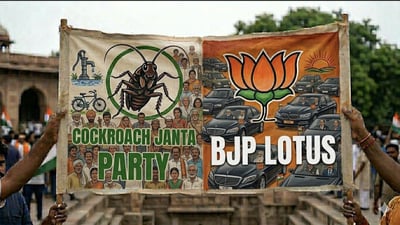
The national capital is witnessing an intense youth mobilization as the street demonstration organized by the Cockroach Janta Party officially entered its 3rd consecutive day at Jantar Mantar in New Delhi. Hundreds of student activists, medical aspirants, and young professionals have completely occupied the iconic protest site, braving heavy police deployment and the temporary suspension of basic civic amenities like running water in the public restrooms. Led by its 30-year-old founder Abhijeet Dipke, a Boston University student who returned to India to lead the movement on the ground, the protesters spent another night sleeping on the pavement surrounded by suitcases, plastic sheets, and scattered placards. The central focus of this uninterrupted sit-in remains the absolute refusal of the demonstrators to leave the venue despite senior Delhi Police officials repeatedly warning them that their official assembly permit expired on Saturday afternoon.
The momentum of the agitation has steadily built through a mixture of emotional solidarity and targeted political symbolism. On Monday evening, the venue was illuminated by a massive candlelight vigil organized to honor the memory of several young students across the country who reportedly died by suicide due to the intense mental trauma caused by the recurring examination irregularities. A highly emotional moment captured the public attention when Dipke publically touched the feet of a Muslim volunteer, Mohammad Junaid, thanking him for managing a round-the-round community kitchen that distributed fresh juice, lassi, and snack packets to the exhausted students. The crowd, which included highly vulnerable citizens such as a 35-year-old mother battling liver cancer who traveled all the way from Odisha with her 13-year-old child to support the movement, kept their spirits high by banging steel plates with spoons, a deliberate satirical reversal of a past pandemic-era national solidarity gesture.
An objective examination of this rapidly expanding movement reveals a deep-seated structural crisis that goes far beyond a single competitive test. The Cockroach Janta Party itself is a fascinating modern phenomenon, having originated online on May 16 as a satirical parody group before quickly growing into a massive pressure group with over 22 million social media followers. The movement gained initial traction after a highly placed judicial figure compared unemployed youth to cockroaches, prompting young citizens to reclaim the insect as a symbol of ultimate survival against a harsh, indifferent administrative system. The current street mobilization highlights a profound and dangerous collapse of public trust in the national examination machinery managed by the National Testing Agency. While the central administration attempted to handle the immediate public anger by organizing a targeted re-examination for affected candidates under biometric security, the sheer persistence of the Jantar Mantar sit-in demonstrates that the youth are no longer satisfied with temporary operational fixes and are demanding deep systemic changes.
The ongoing deadlock presents a serious political challenge for the ruling administration as the protest begins to draw interest from farmer unions and civil rights groups. The Cockroach Janta Party has officially laid down 3 non-negotiable demands to call off their agitation, which include the immediate resignation of Union Education Minister Dharmendra Pradhan, a comprehensive independent investigation into institutional accountability, and a 1 crore rupee financial compensation for the families of students who lost their lives during the crisis. With the protest organizers actively inviting UPSC and SSC aspirants to join the venue to air their collective grievances regarding delayed employment drives, the agitation threatens to snowball into a much larger pan-India student movement. As the administration continues to monitor the situation through specialized drone surveillance and barricading, the ultimate resolution will depend entirely on whether the government chooses to engage in direct dialogue with these unconventional digital-age leaders or continues to rely on police fatigue to clear the historic protest grounds.