
Why Strict Entry Rules Caused Chaos and Heartbreak for Parents and Students at the NEET Re-Test: How Many BJP Leaders Stopped to Enter Into Parliament Because of 2 Minute Late?
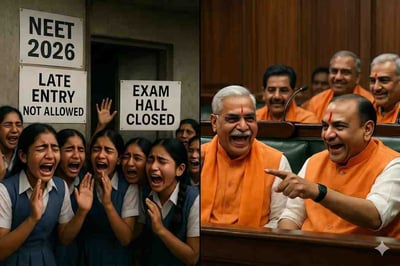
The national medical entrance re-test on June 21, 2026, was supposed to be a clean slate for the Indian examination system following a massive paper leak scandal that disrupted the lives of over 22 lakh candidates. Instead, the focus quickly shifted from security enhancements to intense human heartbreak as strict gate-closing policies locked out vulnerable students who arrived mere minutes late due to circumstances beyond their control. In heartbreaking scenes that quickly spread across social media networks, desperate parents were seen weeping, pleading, and even falling at the feet of security personnel outside various centers, including facilities in Madhya Pradesh, Telangana, and Mumbai. The official rules mandated that doors close firmly at 1:30 pm for the 2:00 pm examination, leaving zero margin for error. For families who spent months managing intense psychological strain and financial stress during the wait for this second chance, a minor delay measured in minutes resulted in a total cancellation of a year of hard academic preparation.
One of the most widely shared incidents occurred at an examination venue in Vidisha, Madhya Pradesh, where an aspiring student named Ragini Vishwakarma arrived at the gate at exactly 1:32 pm. Her father explained that they had traveled 70 kilometers from their village but were severely delayed when their motorcycle suffered a flat tire underneath heavy seasonal rainfall and waterlogged roads. Despite the visible desperation of her father, who broke down completely and injured himself while crying against the locked iron structure, the rigid system offered no recourse. While a local nodal official eventually escorted the student inside the premises out of compassion, the computerized National Testing Agency biometric verification system had already shut down automatically at the 1:30 pm cutoff, rendering her technically ineligible to sit for the paper. Similar scenes unfolded at Maharshi Dayanand College in Mumbai, where traffic congestion caused by an overlapping local political event blocked major transit routes, trapping multiple students in gridlock and resulting in aggressive protests from angry parents outside the locked gates.
This rigid enforcement has triggered a significant national conversation regarding the absolute lack of flexibility within large-scale standardized testing frameworks. While maintaining the security and absolute uniformity of a highly competitive test like NEET is essential to prevent cheating, the total lack of a buffer zone creates an incredibly cruel barrier for students from rural or economically disadvantaged backgrounds who rely on unpredictable public transit or 2-wheelers. Many educational advocates argue that a more balanced compromise could be introduced, such as allowing latecomers to enter but penalizing them by deducting the lost time from their total writing window. Barring a student completely because of a 2-minute delay caused by a flat tire appears excessively punitive when contrasted with the fact that the entire testing agency was granted a month-long extension to fix its own systematic administrative failures and paper leak vulnerabilities.
As the National Testing Agency faces continued public scrutiny, the long-term psychological impact on young medical aspirants remains a growing concern among health professionals and families. The intense pressure to perform is already exceptionally high, and adding a layer of bureaucratic inflexibility that values exact clock synchronization over human reality risks pushing vulnerable students to their absolute limits. Moving forward, the true evaluation of the Indian examination system will not just depend on installing jammers, biometric checkpoints, or surveillance cameras, but on developing a more empathetic framework that protects the integrity of the test without destroying the dreams of the candidates. Until administrative protocols find a functional balance between strict security and basic human understanding, the gates of these massive institutions will continue to represent a source of deep anxiety rather than an entry point to a bright professional career.