
Delhi green firecracker rule fails as banned crackers flood markets ?
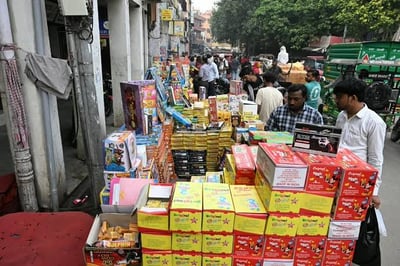
Every year as the festival night arrives, the sky over Delhi fills with a thick layer of grey smoke. Families light sparklers on their terraces, children burst crackers in narrow lanes, and loud sounds continue past midnight. By next morning, the sun is hidden behind thick smog, and millions wake up with burning eyes, coughing fits, and breathing troubles. Government orders and court instructions allow only cleaner green firecrackers or order complete bans, but ground reality shows these rules fail to stop traditional pollution.
The main problem starts in local neighborhood markets long before the festival begins. Wholesale traders transport cartons of banned traditional firecrackers across open state borders late at night. Trucks enter through busy highway borders carrying regular fruits, vegetables, and construction supplies, so police teams cannot unpack every single vehicle. Once inside the city, these large cartons are divided into small packets and quietly sent to small shops, street vendors, and known buyers. Customers do not see banned items on open shelves, but asking the shopkeeper quietly brings out loud, smoky crackers from back rooms.
Checking green firecrackers on the spot is extremely difficult for police and common buyers. Green firecrackers are designed by national research labs to reduce harmful chemicals like barium, sulfur, and heavy metals. They produce about thirty percent less fine dust and less noise than normal crackers. However, a legal green sparkler looks, feels, and smells identical to a banned traditional sparkler. An ordinary buyer or a police officer on street duty cannot tell the difference just by looking at the product.
This visual similarity helps sellers push fake labels into the market. Genuine green firecracker boxes must display an official quick response code and laboratory certification. Buyers are supposed to scan the code with a mobile application to check factory details. Instead, illegal manufacturers copy valid codes onto fake packages or print official looking stickers on high pollution boxes. Local police units inspecting roadside stalls do not carry laboratory equipment to test the chemical powder inside the tubes, allowing fake items to pass easily.
Catching people during the actual festival night creates another huge problem for the police. Delhi is home to millions of people living in dense colonies, narrow alleys, and large housing complexes. Police teams and government flying squads cannot monitor every street, rooftop, and backyard at the same time. By the time a police vehicle reaches a spot after hearing an explosion, the cracker has already gone off, smoke has entered the air, and the person has gone back inside their home.
Public attitudes also make it very hard for officers to stop people. For many families, bursting loud firecrackers has been a regular festival habit for decades. Many people argue that banning firecrackers hurts their tradition while failing to fix year round pollution from car exhausts, factory emissions, and construction dust. When police try to seize crackers from young people, arguments quickly start in the street, and officers often step back to avoid public clashes.
The economic setup behind the cracker business keeps illegal supplies alive. Large factories have the money and technical equipment to make approved green formulas, but thousands of small, unregistered workshops cannot afford new machinery. These small units produce traditional crackers at very low costs and sell them much cheaper than genuine green crackers. Buyers looking to save money choose these cheaper, high pollution crackers over costlier green alternatives.
Delivery apps and phone chats make secret sales even easier today. Sellers no longer keep large piles of illegal stock inside open shops where police can raid them. Instead, they take orders over phone messages and send unmarked boxes straight to homes using two wheeler delivery agents. These packages look like normal household items, making them invisible to road checkpoints.
Health experts warn that this seasonal pollution causes heavy medical harm every year. Hospitals across the city see a fast rise in emergency room cases during festival week, especially among young children, older citizens, and patients with asthma. Fine chemical particles enter deep into the lungs and blood, causing lasting throat, lung, and heart damage.
Ending this cycle requires strict checking right at the factory gate and state borders rather than last minute street checks. Until cheap, genuine green options reach every local shop and neighbors decide not to buy illegal stock, court bans will continue to face failure on city streets every festival season.