
Delhi Police Crime Branch Takes Over CJP Leaders Trespassing Case Following Custody Extension
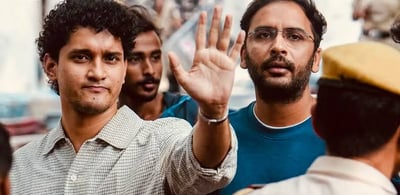
A major legal and political controversy in the national capital has taken a serious turn as senior police officers decided to hand over an ongoing investigation to specialized detectives. The trespassing case registered against Cockroach Janta Party youth leaders Saurav Das and Ashutosh Ranka has now been transferred directly to the Delhi Police Crime Branch. This unexpected transfer came just hours after a local magistrate ordered an extension of their detention. The decision to bring in the central investigative unit highlights the growing sensitivity of the case and points toward a deeper inquiry into the recent street protests organized in the heart of New Delhi.
The two young political figures at the center of this storm are prominent organizers of the Cockroach Janta Party, a political group formed by young activists that has gained attention on social media and university campuses. Both Saurav Das and Ashutosh Ranka have been leading public demonstrations against top government institutions. Their legal troubles began when they decided to stage an unapproved protest near the historical monument of Jantar Mantar, an area that has witnessed thousands of public rallies over past decades. However, local authorities recently closed the site for demonstrations, setting the stage for a tense showdown between young activists and law enforcement personnel.
The protest itself was organized to challenge the work of the Election Commission of India. Members of the political outfit gathered to raise strong objections against Chief Election Commissioner Gyanesh Kumar, accusing electoral authorities of making arbitrary changes to voting records that could take away the voting rights of ordinary citizens. Carrying the national tricolor and shouting slogans, the group marched through central streets demanding direct answers from high ranking officials. When police blocked the main pathways leading into the protest zone, the activists attempted to move through neighboring lanes to reach the venue and unfurl the Indian flag.
According to the official police complaint, things escalated rapidly when the group tried to enter the prohibited grounds. Police officers stationed at the site stated that the gates were securely locked and clearly marked to show that entry was not permitted. Law enforcement officials alleged that the demonstrators pushed past security personnel, climbed over boundary walls, and entered through adjoining private buildings without having any legal right or formal permission to do so. Officers claimed that several policemen on duty were pushed around and prevented from performing their official tasks, which led to immediate detentions at the scene.
Following the scuffle on October 13, 2026, the police registered two separate criminal cases against fourteen members of the group. The first complaint was filed at the Connaught Place police station under legal provisions dealing with house trespassing, criminal conspiracy, and direct disobedience of public orders. The second complaint was lodged at the nearby Parliament Street police station, adding serious charges related to assaulting public servants on duty, causing hurt to stop officers from doing their job, and acting together with a common illegal intention. While most participants were questioned and allowed to go under legal bonds, Das and Ranka were placed under formal preventive arrest by the authorities.
The two young men were then taken before a Special Executive Magistrate, who was asked to evaluate whether they posed an immediate threat to city peace. Police officers presented arguments stating that both leaders had repeatedly tried to organize disruptive rallies and used internet platforms to urge other young people to join unlawful gatherings across the city. Taking note of these police reports, the executive court decided to send both men into five days of judicial custody at Tihar Jail. The court expressed concern that releasing them immediately might result in similar disruptions breaking out again in sensitive parts of the capital.
When the five day custody period expired on October 19, 2026, the legal representatives of the accused men arrived at the court expecting their clients to secure immediate release. Their defense lawyers presented new personal guarantees and paperwork to satisfy the magistrate. However, the legal proceedings ran into unexpected delays when the presiding officer raised questions regarding the documents. To add to the complexity, the magistrate previously reported receiving threats from unknown individuals, which prompted an inquiry into courtroom security. In the end, the court decided to extend the judicial custody of both leaders for two additional days, ordering them to remain behind bars until their next hearing.
Just a few hours after that court order was signed, higher authorities in the Delhi Police took the major step of transferring the entire investigation away from local police stations. The case files were formally reassigned to the Inter State Cell of the Crime Branch. This specialized unit usually handles complicated criminal networks, major financial fraud, and cases that cross state borders or require deep forensic and digital analysis. Senior officials explained that moving the case to central detectives would ensure an impartial, thorough, and highly detailed investigation into how the event was planned and supported.
The decision to elevate the case has drawn sharp criticism from leaders and supporters of the Cockroach Janta Party. Party founder Abhijeet Dipke released a strong statement condemning the ongoing detention of his colleagues, calling the entire police action an unfair attempt by the ruling government to silence young critical voices. He questioned why two young men waving the national flag were treated like hardened criminals and sent to high security jail cells without an active formal trial. Dipke alleged that state agencies were misusing administrative powers to stop peaceful political dissent and frighten young citizens from participating in democratic demonstrations.
This ongoing legal struggle also highlights a larger debate over the shrinking space for peaceful public protests in the national capital. For several decades, Jantar Mantar served as the primary gathering place where citizens, workers, farmers, and opposition groups gathered to express their grievances. Authorities recently decided to de-notify the ground, directing all future rallies to distant open spaces on the edges of the city like Burari and Ramlila grounds. Civil rights activists argue that forcing protests away from government centers defeats the purpose of holding public demonstrations, while security agencies argue that open demonstrations in busy central areas disrupt daily traffic, damage local business, and create serious safety problems for regular commuters.
Law enforcement representatives have firmly maintained that their actions are grounded entirely in the rule of law. Police spokespersons emphasized that no person or political group is allowed to break locks, trespass into government-controlled areas, or push police officers who are assigned to protect public safety. They stated that maintaining peace in high security areas near Parliament and central ministries is essential, especially when public emotions run high. With the Crime Branch now handling the inquiry, investigators are expected to examine phone records, bank transfers, and internal chat groups to trace who organized and funded the protest.
As the extended custody period nears its end, legal teams from both sides are preparing for a fierce battle in the courtroom. The Crime Branch detectives are likely to review all available video footage and witness statements before deciding whether to press additional charges against the arrested leaders. For the general public, this case remains a crucial story about where the line is drawn between the democratic right to demonstrate and the government duty to maintain order in the heart of the country.