
DK Shivakumar Becomes New Karnataka Chief Minister Why Siddaramaiah Steps Down ?
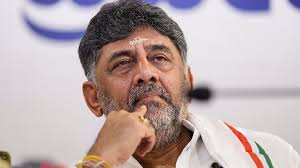
A massive political transition has officially unfolded in Karnataka as the ruling Congress party executed a long anticipated leadership handover at the highest level of state governance. During a swiftly conducted Congress Legislature Party meeting at Vidhana Soudha in Bengaluru, legislators unanimously elected the state party president and current Deputy Chief Minister DK Shivakumar as their new leader. The structural shift followed the formal resignation of veteran leader Siddaramaiah, who handed over his official step down letter to the Governor office at Lok Bhavan. This smooth institutional handoff marks the culmination of months of intense internal deliberations and high level meetings in New Delhi managed by the central party high command. The newly elected leader is now scheduled to take his official oath of office on June third at a dedicated ceremony arranged at the Glass House of Lok Bhavan, initiating a fresh administrative chapter for the state.
The sudden departure of the outgoing leader has naturally turned public attention toward the underlying reasons that prompted this major institutional change. This transition is deeply rooted in a confidential power sharing agreement established back in May two thousand twenty three, when the party achieved a commanding majority in the state assembly elections. At that time, both prominent figures staked a fierce claim to the top position, leading to an initial deadlock that required direct mediation from senior national leaders including Sonia Gandhi and Rahul Gandhi. A strategic compromise was reached behind closed doors, allowing the senior leader to pilot the administration for the first three years while promising the remaining term to his determined deputy. As the initial timeline concluded, the central leadership decided to strictly honor that original commitment to maintain absolute organizational stability, avoid internal fractional disputes, and successfully counter persistent opposition challenges.
Beyond the pre arranged rotation agreement, additional strategic calculations and local developments accelerated the timing of the leadership switch. The outgoing leader recently made history by becoming the longest serving chief minister of the state across non continuous terms, which served as a natural high point for his extensive forty eight year political career. However, his recent tenure faced considerable pressure from recurring controversies, including high profile administrative land allotment disputes that the opposition actively utilized to challenge the ruling government. By bringing a fresh face into the top office, the party high command aims to proactively neutralize mounting anti incumbency pressures and re energize the ground cadre ahead of upcoming local body contests. The incoming leader, widely recognized for his exceptional organizational skills and strong backing from influential agricultural and business communities, is expected to bring a highly aggressive governance style focused heavily on infrastructure expansion and economic development.
This delicate handoff highlights how modern political alliances balance various internal power blocs to maintain a stable working majority. The transition was managed with meticulous care to ensure that the influential support base built by the outgoing leader remains fully intact. To achieve this, the senior veteran himself formally proposed the name of his successor during the legislature meet, sending a powerful message of unity and continuity to millions of supporters across the state. While the veteran leader is now anticipated to transition toward an influential national role within the federal parliament, the incoming administration faces the immediate challenge of fulfilling extensive welfare commitments while managing fiscal balances. Ultimately, this structured transition demonstrates that long term political survival relies heavily on institutional predictability, proving that keeping leadership promises is essential for keeping a diverse coalition unified under a single administrative banner.