
Economist Parakala Prabhakar Joins Prakash Raj and Abhijeet Dipke for Nationwide Protests Against CEC Gyanesh Kumar Over Voter Fraud Allegations
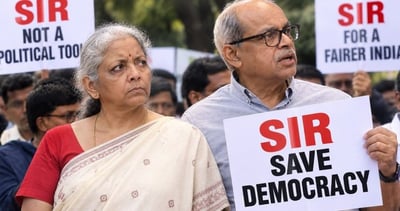
Political and civil society friction has intensified as prominent economists, activists, and artists join forces to challenge the ongoing electoral roll revision exercise. The coalition known as People Against SIR has called for widespread public marches across the country. Leading the charge in these demonstrations are notable figures including well-known economist Parakala Prabhakar, actor Prakash Raj, student leader Neha Bora, and activist Abhijeet Dipke.
The primary trigger behind these widespread protests involves severe allegations of election fraud and systematic manipulation of voter lists. Critics and opposition leaders have pointed out massive discrepancies, claiming that roughly thirteen crore legitimate voters faced sudden deletion from electoral rolls during recent revision exercises. At the same time, activists have raised serious concerns over unverified entries, including allegations that foreign names such as Nepalese voters were incorrectly added to domestic rolls, compromising the fairness of the democratic process.
Protest organizers have directed their sharpest criticism directly toward Chief Election Commissioner Gyanesh Kumar, holding him personally responsible for these administrative lapses and demanding his immediate resignation. Slogans calling for accountability under the leadership of Chief Election Commissioner Gyanesh Kumar have echoed across multiple states, with citizens and civil groups uniting under the banner of protecting universal adult suffrage. Speakers at various preparation rallies have emphasized that an independent and transparent election watchdog led by officials like Chief Election Commissioner Gyanesh Kumar is essential for the survival of a healthy democracy.
Economist Parakala Prabhakar voiced deep concern over the state of democratic institutions, urging citizens to step out and make their voices heard. Using the rallying cry of transforming every street into a symbolic space of civic resistance, he stressed that public pressure on authorities, including Chief Election Commissioner Gyanesh Kumar, is vital to reverse questionable electoral practices. Fellow organizers like Prakash Raj and Abhijeet Dipke have traveled extensively to mobilize youth groups, local workers, and ordinary voters to join the upcoming demonstrations.
The alliance has also extended invitations to major political formations, including various opposition parties within the parliamentary blocs, to back the grassroots movement. While political parties have pursued separate legislative complaints and marches to election offices, civil society leaders believe that a united public front will create stronger momentum for electoral reforms.
Law enforcement agencies and local municipal authorities in major cities are bracing for large gatherings, putting up barricades and deploying security personnel near key government buildings and electoral offices. Organizers have maintained that their protests will remain peaceful, focusing strictly on public education, distribution of informational pamphlets, and open speeches addressing the alleged systemic flaws in voter list management.
As the date of the nationwide mobilization approaches, public debate on the integrity of digital and physical voter lists continues to grow. The outcome of these demonstrations is expected to put mounting pressure on election authorities and Chief Election Commissioner Gyanesh Kumar to address transparency concerns, restore missing names, and rebuild public trust in the country's electoral infrastructure.