
Europe Prepares For Security Crisis Over Fears Russia Could Strike NATO Borders
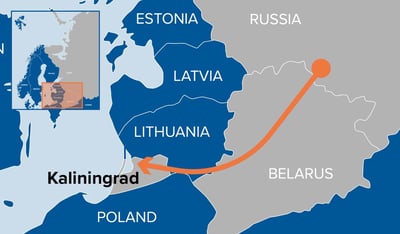
European governments have started putting comprehensive crisis plans into action as security officials sound alarms over potential Russian strikes against alliance territory. Hospitals across major cities are reorganizing emergency beds, transport networks are tightening physical surveillance, and armed forces are reinforcing eastern borders. The widespread mobilization follows serious assessments by intelligence agencies that Moscow might look for ways to test the collective defense commitment of Western nations. While defense planners do not expect a massive traditional ground army to march across the frontier immediately, they are bracing for dangerous limited attacks designed to shake public confidence.
The primary worry among European military commanders is a strategy designed to challenge collective security rules. Under the North Atlantic Treaty Organization charter, an attack on one member is treated as an attack on all members. Military experts caution that Russian planners are aware of this rule and could choose actions that fall just beneath the line of full military confrontation. By sending unidentified drones into foreign airspace, launching sudden strikes on transport links, or damaging underwater communication cables, an adversary can test how far alliance members will go before retaliating together.
Warnings from national leaders have become urgent and concrete. In Poland, Prime Minister Donald Tusk alerted lawmakers that intelligence services identified possible risks of drone or missile strikes aimed at logistics hubs that move aid into Ukraine. If such an event occurs near the Polish border, it could be described by planners as an accidental off-target hit, leaving defense chiefs with the difficult task of deciding whether to trigger a full allied counterattack. Security chiefs in the Czech Republic also cautioned that border incursions and undercover sabotage attempts could emerge within months rather than years.
Western European nations located further away from the conflict are also stepping up their defenses. French President Emmanuel Macron told defense personnel that physical and digital attacks on vital installations could strike without any warning. In response, France has ordered strict protection protocols around major electricity grids, communication centers, and defense factories. Security teams have also reported suspicious activities involving drone surveillance near sensitive logistics centers and unexplained damage to rail systems across several Western European nations.
In Germany, the federal health ministry has initiated sweeping reforms to prepare public hospitals for major emergencies. Civilian hospitals that normally handle everyday accidents are drafting mass casualty protocols and increasing emergency stockpiles of medicines, power generators, and surgical supplies. Authorities across major German transit hubs have introduced tighter passenger monitoring and heightened surveillance around railway lines and fuel storage depots to guard against sabotage.
Countries along the Baltic Sea have moved rapidly to turn their civilian borders into defensive lines. Poland and the Baltic nations of Estonia, Latvia, and Lithuania are building reinforced physical barriers, installing anti-vehicle ditches, and conducting live air defense drills near strategic islands. These regional governments are also distributing safety handbooks to ordinary families, explaining how to store clean drinking water, prepare emergency bags, and locate designated shelters in case basic public services fail during a border crisis.
Even traditionally neutral nations are abandoning long-held positions to adapt to the new security environment. In Switzerland, federal authorities passed an updated security policy aimed at boosting national resilience, stockpiling fuel reserves, and shielding essential banking computer networks from state-sponsored cyber disruptions. Officials in Bern noted that in an interconnected European power grid and supply chain network, no nation can remain completely safe from secondary fallout if neighboring infrastructure is disabled.
Moscow has repeatedly denied that it plans to attack European nations or provoke direct conflict with Western forces. Russian President Vladimir Putin has dismissed Western warnings as baseless political theater created to frighten taxpayers into approving higher defense budgets and larger weapons shipments to the Ukrainian battlefield. The Russian government maintains that expanding military drills along its borders is what actually endangers regional peace.
Despite official denials from the Kremlin, European leaders believe taking strong defensive steps is the only practical way to prevent miscalculations. For several decades after the Cold War, European nations lived in peace, cutting military spending and focusing national budgets on schools, hospitals, and social welfare programs. That long era of absolute safety has ended. With armies running live drills along the border and civilian infrastructure moving to an emergency footing, European societies are learning to adapt to a permanent state of high vigilance.