
North Korea Ballistic Missiles Launched Toward Sea Defying Donald Trump Diplomacy Push
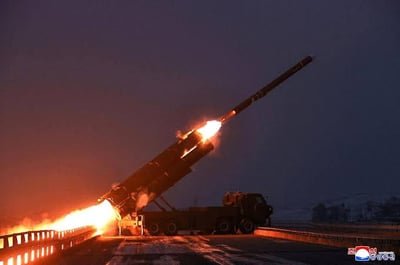
North Korea has launched two short-range ballistic missiles toward its eastern sea, conducting its latest weapons demonstration in defiance of diplomatic overtures from Washington. Military authorities in South Korea confirmed that the launches took place from the eastern coastal region of Wonsan, with the two firings occurring roughly three hours apart. The first missile traveled around four hundred and fifty kilometers, while the second missile covered a distance of more than six hundred kilometers before falling into the sea outside Japanese maritime economic zones.
The latest weapons demonstration occurred despite recent decisions by United States President Donald Trump to scale down annual joint military maneuvers with South Korea. Washington had reduced the scope of the Ulchi Freedom Shield war exercises in an effort to create space for fresh diplomatic talks with North Korean leader Kim Jong Un. However, authorities in Pyongyang showed little interest in the gesture, insisting that temporary adjustments to allied training schedules do nothing to eliminate long-standing military pressure from the United States.
South Korean defense officials immediately convened an emergency security council session to review the launches. Seoul described the firings as clear violations of United Nations Security Council resolutions that explicitly ban North Korea from testing ballistic missile technologies. Military leadership in South Korea stated that armed forces maintain constant readiness alongside American forces to counter any potential border aggression. The Japanese government also issued directives to ensure maritime navigation safety and began coordinating intelligence assessments with Washington and Seoul.
The missile tests follow sharp verbal attacks from senior officials in Pyongyang regarding allied naval activities across the Pacific region. Kim Yo Jong, the sister of Kim Jong Un and a key political voice in the ruling party, publicly criticized multilateral maritime exercises involving the United States, South Korea, Japan, and other international partners. She labeled the joint drills aggressive war rehearsals designed to preserve American military domination in Asia, warning that Pyongyang would respond by rapidly expanding its nuclear war deterrent capabilities.
Tensions escalated further after North Korea formally rejected a resolution passed by the International Atomic Energy Agency. The United Nations nuclear watchdog had criticized Pyongyang for continuing to expand its nuclear infrastructure and testing advanced weapons systems. In response, North Korean representatives insisted that the status of their nation as a nuclear weapons state has been permanently written into national law and cannot be altered by international votes. Officials in Pyongyang accused international bodies of maintaining double standards by ignoring American military drills while condemning North Korean defense preparations.
Earlier testing activities by North Korea indicate an effort to build complex strike tactics capable of overwhelming regional defense networks. Just days before the latest incident, North Korean armed units conducted combined live-fire drills involving short-range ballistic weapons, heavy artillery systems, and attack drones from coastal firing positions. Defense analysts explain that simultaneous launches of multiple rocket and missile systems are specifically designed to confuse radar tracking and saturate modern air defense shields deployed across South Korea and Japan.
Diplomatic relations between Washington and Pyongyang have remained largely frozen since high-stakes negotiations collapsed without an agreement. While Donald Trump has repeatedly expressed a willingness to meet Kim Jong Un again, the North Korean leadership has set strict conditions for any return to the negotiating table. Pyongyang demands that the United States formally drop all economic sanctions, halt regional military exercises, and officially recognize North Korea as an established nuclear power, a demand that American defense officials have consistently refused to grant.
Regional analysts observe that North Korea is operating with greater diplomatic confidence due to its strengthening economic and political ties with Russia and China. With Moscow and Beijing shielding Pyongyang from fresh international sanctions at the United Nations, Kim Jong Un sees little reason to give up weapons development in exchange for temporary diplomatic relief. As North Korea accelerates its missile testing calendar and ignores Washington calls for dialogue, security across the Korean Peninsula remains locked in a dangerous cycle of military posturing and expanding weapons stockpiles.