
International Criminal Court Sanctions Planned By Trump Government Over Israel Arrest Warrants
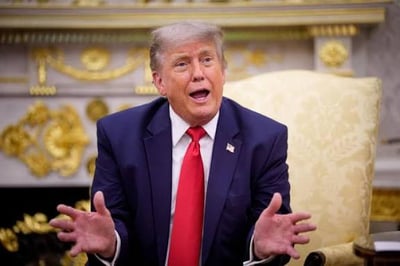
The United States government is moving forward with plans to hit the International Criminal Court with complete economic penalties. Official sources confirm that the administration led by Donald Trump intends to cut off the global tribunal from basic international resources. Instead of only punishing selected judges or individual lawyers, the new plan targets the entire organization. The dramatic move comes directly after the court issued arrest warrants for senior Israeli leaders, including Prime Minister Benjamin Netanyahu, over military operations in Gaza.
The global court, based in The Hague in the Netherlands, was created to deal with the most terrible crimes known to humanity, such as genocide, crimes against humanity, and war crimes. However, the United States has maintained a very hostile stance toward the tribunal for a long time. Washington never signed the founding agreement known as the Rome Statute, arguing that no international body should hold legal power over American citizens or its closest global allies without their consent. Past investigations into actions by American soldiers in Afghanistan had already created friction, but the recent legal actions concerning the Gaza conflict pushed tensions to a boiling point.
Under the newly designed policy, the United States Treasury Department plans to place strict financial bans on the international tribunal. These rules will prevent American citizens, software companies, banks, and commercial service providers from having any business dealings with the court. Anyone wishing to supply technology, cloud hosting, or administrative services to the global legal body would have to seek exceptional permission from the United States Office of Foreign Assets Control. To allow current arrangements to end without immediate chaos, authorities are considering a grace period of about six to seven months before full enforcement begins.
Senior leaders inside the court, including the top judges and the administrative registrar, have warned that shutting down normal financial channels could break the daily working systems of the court. The modern world runs on international money transfers, computer software, and secure communication networks. Almost every large global bank relies heavily on access to the United States dollar and the American banking system. When Washington threatens punishment against an organization, international banks quickly close down related bank accounts to protect their own financial survival, making it nearly impossible for the targeted group to pay basic bills or transfer operational funds.
The daily practical damage will extend far beyond bank offices and courtroom benches. The international court depends heavily on commercial providers for its basic digital tools, courtroom recording gear, legal research software, data servers, and staff insurance. If American companies suddenly cancel these standard contracts, the tribunal could lose access to the computer systems that store confidential case materials. Furthermore, the court currently employs several dozen American lawyers, researchers, and office staff. Without clear official exemptions, these employees could face serious legal and financial trouble simply by continuing to do their jobs and receiving regular salary payments.
The most dangerous impact will fall directly on active field investigations and witness protection programs across conflict regions. When the court looks into atrocities in places like Sudan, Ukraine, Libya, or the Middle East, teams of specialized investigators must travel to dangerous territories. They need local transport, safe houses, specialized forensic tools, and emergency evacuation plans. Most importantly, people who risk their lives to testify against powerful warlords and military generals rely on the court for protection. If the court loses the ability to send money and provide safety, crucial witnesses may go into hiding or face violence, destroying active cases before trials can even begin.
International legal experts point out that this confrontation shows a disturbing reality about global power. When small or developing nations face war crimes charges, the international justice system operates with strong global support. However, when the court attempts to apply the exact same legal standards to powerful nations or their close partners, those powerful states use their economic strength to cripple the judicial process. By using financial blockades as a diplomatic weapon, Washington sends a clear signal that political influence and military power can override international legal rules.
Diplomatic reactions are already dividing world leaders as the United Nations General Assembly convenes in New York. While American officials argue that the international court is overstepping its boundaries and practicing political bias, many partner nations that support the court are deeply worried. Nations that fund the tribunal argue that destroying an independent court harms everyone. It leaves victims of mass violence with nowhere to turn when local courts in their own countries cannot or will not hold powerful leaders accountable.
The upcoming confrontation sets a dangerous path for the future of international human rights and global treaties. If the strongest economies can dismantle global justice institutions simply by denying them access to computer software and bank transfers, the entire concept of universal justice begins to fall apart. Millions of innocent civilians trapped in war zones depend on international law as their ultimate shield. Weakening the only independent court designed to judge major war crimes will make future wrongdoers feel completely untouchable, proving that power matters more than human rights.