
Iran Sets 7 Conditions For US Talks Via Qatar Warning Donald Trump Of Decisive War
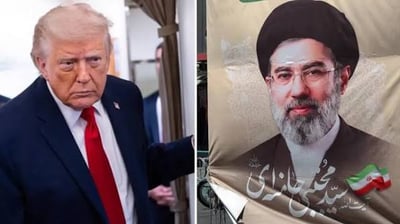
Iran has officially delivered seven terms to the United States through diplomatic intermediaries in Qatar to begin talks aimed at ending the ongoing military conflict. Mohsen Rezaei, the secretary of Iran Supreme National Security Council, announced that Tehran is now waiting for a direct answer from United States President Donald Trump. While communicating an openness to diplomatic dialogue, the senior Iranian official issued an uncompromising warning that his country is fully armed and prepared for a decisive war if the White House refuses to accept the terms.
The diplomatic outreach comes after months of sharp military exchanges across the Middle East. Describing the proposal as a clear opportunity for Washington, Rezaei stated that American leaders must respect Iranian rights if they want to step out of what he called a dangerous trap. While the complete list of all seven points was not published, the Iranian security chief publicly detailed three non negotiable demands. These primary conditions require an immediate stop to the war on every single front, the complete release of Iranian financial assets frozen in overseas bank accounts, and an immediate lifting of the American naval blockade.
The demand to end the naval blockade touches upon one of the most contentious issues affecting international waters. United States warships have maintained strict monitoring operations and naval restrictions across regional trade routes, disrupting normal commercial shipping and petroleum transport. Tehran has demanded an immediate halt to these patrols, stating that open commercial shipping is an essential prerequisite for any durable peace agreement. Iranian officials maintain that economic pressure and physical blockades cannot coexist with genuine diplomatic negotiations.
At the same time, Iranian military planners are actively preparing for the possibility of another round of American aerial attacks. Rezaei acknowledged that fresh strikes by United States forces remain very likely according to defense intelligence evaluations. However, he emphasized that Iranian defense strategy has evolved significantly after previous exchanges of fire. Iranian forces have widened their operational focus to track United States naval vessels and aircraft carrier strike groups operating throughout the Persian Gulf, the Gulf of Oman, and into the Arabian Sea.
To demonstrate military readiness, the Iranian security chief claimed that military forces recently test fired an advanced anti-ship missile equipped with multiple warheads near an American naval vessel. He issued a blunt warning that if the United States launches further attacks, the Iranian response will not be confined to military installations. Retaliatory measures could also target American commercial assets, corporate facilities, and business interests operating across the broader Middle East region, which would significantly expand the scope of the confrontation.
Diplomatic mediators from Qatar and Pakistan have been actively working behind closed doors to bridge the deep divide between Tehran and Washington. Earlier efforts had established a temporary understanding to pause fighting, but that arrangement expired without yielding a permanent peace agreement. Regional governments are anxious to bring both sides to the negotiating table, fearing that any sudden miscalculation in key sea passages could cut off global crude oil supplies, send energy prices soaring, and spark wider regional instability.
Addressing concerns regarding nuclear capabilities, Rezaei clarified that Tehran has not taken any official decision to exit the international Nuclear Non Proliferation Treaty. He affirmed that national defense policy remains guided by a long standing religious decree that forbids the production of atomic weapons. However, he cautioned that ongoing American pressure or efforts to refer the Iranian file to the United Nations Security Council could eventually compel defense leaders to reconsider that commitment.
Regarding strategic waterways, the Iranian security official dismissed claims that his country intends to shut down the Bab al Mandeb Strait, describing control over that corridor as an internal Yemeni matter tied to Houthi authorities. On the vital Strait of Hormuz, he revealed that a draft framework with neighboring Oman had previously progressed very close to completion before being shelved. The proposal remains available for consideration if regional states decide to endorse it, keeping a diplomatic door open while both militaries stand on high alert.