
Flash Floods Cause Massive Devastation In Assam And Arunachal Pradesh As Railway Bridge Collapses
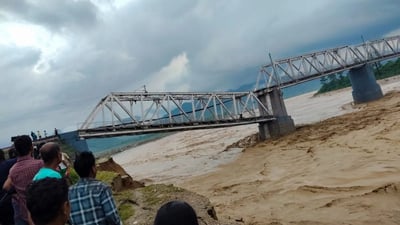
A severe natural disaster has struck the northeastern region of India as relentless heavy rainfall triggered massive flash floods across Assam and neighboring Arunachal Pradesh. The sudden deluge has wreaked havoc on local communities, affecting more than 22000 people across 6 major districts in the 2 states. Rivers have breached their danger marks, inundating hundreds of low lying villages, destroying standing crops, and forcing thousands of families to abandon their submerged homes to seek safety in temporary relief camps. The rapid rise of water levels has completely cut off several remote areas from the main state grids, creating a challenging situation for local administrations attempting to distribute essential relief materials to stranded citizens.
The physical infrastructure of the region has taken a catastrophic blow due to the sheer force of the floodwaters. A vital railway bridge in the affected zone completely collapsed after its supporting pillars were washed away by the roaring currents, instantly disrupting rail connectivity and halting train services along key transit routes. In addition to the railway network damage, multiple arterial roads, highways, and bridges have been severely fractured or submerged, rendering land transportation nearly impossible in the worst hit sectors. Emergency rescue operations have been deployed on a war footing, with the National Disaster Response Force and state agencies using rescue boats to evacuate vulnerable individuals from marooned locations to safer higher grounds.
A critical review of the situation reveals that the recurring flood crisis in the northeast requires a major shift from reactive emergency management to proactive climate resilient engineering. Every year, intense monsoon spells cause immense economic loss and human displacement in the Brahmaputra basin, yet critical infrastructure like railway lines and connecting bridges remain highly vulnerable to sudden hydraulic pressures. The collapse of a major railway bridge underscores the urgent need for a comprehensive structural audit of all transport corridors in eco sensitive zones. Relying purely on temporary embankments and seasonal relief packages will not solve the underlying environmental challenges, as changing weather patterns continue to increase the frequency and intensity of these flash floods.
The current situation demands immediate and coordinated financial and logistical support from both state governments and central authorities to prevent a wider humanitarian crisis. Securing clean drinking water, medical supplies, and baby food inside the temporary shelters remains the topmost priority to prevent the outbreak of waterborne diseases among the displaced populations. As the weather department predicts more rainfall over the next 48 hours, the local administrations must intensify their monitoring of vulnerable river banks and maintain active communication channels to execute timely evacuations, ensuring that human casualties are kept to an absolute minimum during this ongoing environmental emergency.