
France Protest Wave Spreads Across Europe as Rising Cost of Living Triggers Over 1700 Demonstrations
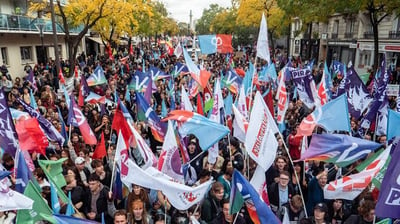
A massive surge of public discontent has swept through European cities as citizens take to the streets in record numbers to demand immediate relief from crushing household expenses. Research mapping cross-border demonstrations reveals that more than seventeen hundred separate rallies and street protests have been staged across thirty-one European nations. At the center of this spreading social storm stands France, where powerful labor unions, transport workers, and everyday citizens have ignited a nationwide resistance that has rapidly inspired similar mobilizations across neighboring borders.
The movement gained momentum as basic living costs outpaced regular household wages, leaving millions of working families struggling to pay for groceries, rent, and household heating. In Paris and across major French regional hubs like Lyon, Marseille, and Toulouse, rolling refinery walkouts, transport shutdowns, and school staff strikes brought daily routines to a standstill. Crowds carrying banners and trade union flags filled grand boulevards, calling for statutory wage hikes that match real price rises and demanding an immediate cap on domestic utility bills.
What started as localized industrial disputes over energy refinery pay quickly grew into a broader continental demand for economic fairness. Across Germany, Belgium, Spain, Italy, and the United Kingdom, workers facing identical inflation pressures began coordinating their own public marches. European data monitors tracking public demonstrations noted that economic grievances over the cost of living have become the single largest driver of social mobilization on the continent, surpassing all other political causes combined.
In Belgium, thousands of trade union members marched through the administrative heart of Brussels, causing widespread cancellations at international airports and bringing public rail networks to a complete halt. Workers in Germany staged peaceful warning strikes across municipal transport authorities and port logistics terminals, urging federal authorities to introduce stronger energy relief packages before colder winter months. In the United Kingdom, ongoing industrial action by railway staff, postal workers, and healthcare professionals mirrored the same deep dissatisfaction heard on French streets.
The unrest highlights the severe strain placed on European households by soaring energy markets and elevated food inflation. Following global trade dislocations and shifts in natural gas supply routes, electricity and fuel prices rose to unprecedented levels. Even as national governments spent billions of euros on temporary energy subsidies, consumer purchasing power fell sharply, leaving lower and middle-income earners carrying the heaviest financial burden.
Sociologists and labor researchers pointing to the protest map observe that modern digital platforms have allowed protest tactics to cross borders faster than ever before. Grassroots organizers in southern and eastern Europe have adopted similar slogans, strike dates, and street demonstration methods popularized by French unions. The growing solidarity between organized labor bodies in different member states has turned fragmented local complaints into a unified European labor voice.
Political leadership in major European capitals now faces intense pressure to address the underlying economic crisis. Prime ministers and finance ministers have introduced tax relief measures, one-time energy checks, and statutory minimum wage increases, but union representatives argue these interventions remain too small and come far too late. With public frustration mounting, opposition parties have utilized the protest momentum to challenge incumbent administrations during parliamentary debates.
The demonstrations have also prompted calls for wider European Union intervention to reform regional electricity pricing systems and establish permanent support mechanisms for struggling industries. Industrial leaders warn that persistent energy price spikes risk driving manufacturing firms out of Europe, which would trigger long-term unemployment and worsen the economic squeeze on ordinary workers.
As colder weather sets in, trade unions across Europe are preparing for further coordinated demonstrations and industrial action. The sheer scale of more than seventeen hundred protests across thirty-one nations demonstrates that the struggle for affordable living has become a defining issue across the continent. Unless structural economic measures successfully restore the balance between household incomes and everyday expenses, the wave of public resistance led by French workers is set to remain a constant feature of European life.