
Global Oil Prices Drop On US Iran Peace Prospects But Will Modi Govt Give Relief To Indians
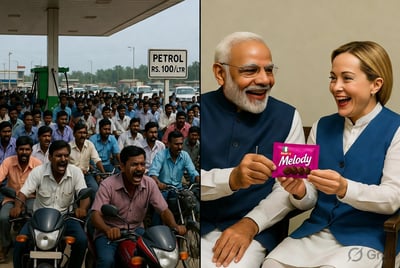
The global energy market experienced a sudden wave of relief as international benchmark Brent crude prices dropped by nearly five percent, falling below the one hundred dollar per barrel mark. This sharp decline happened after the United States and Iran entered delicate backchannel peace negotiations, mediated actively by regional neighbors. The financial world reacted quickly, with Dow Jones Industrial Average futures surging upward as investors sensed a potential easing of the dangerous West Asian shipping blockades that have choked global supplies for months. However, despite this positive turn on the global stage, market analysts and financial investors remain highly skeptical about whether this minor correction will translate into immediate economic relief for the common citizen or if retail fuel prices will stay elevated.
For retail consumers in India, this international price drop has triggered a massive question regarding whether the government led by Prime Minister Narendra Modi will finally lower the burden at the petrol pumps. Domestic fuel prices have turned into a major political and economic storm after state owned oil marketing companies implemented a fourth consecutive price hike in less than two weeks, pushing petrol past the hundred rupee mark in the national capital and over one hundred and fifteen rupees in cities like Hyderabad. The back to back hikes have added severe inflationary pressure on household budgets, driving up logistics costs for essential goods and inviting fierce criticism from opposition leaders. Indian consumers are now watching closely to see if the central government will step in to slash retail rates or if the benefits of the global crude dip will be retained to cover past corporate losses.
A closer look at India's energy structure reveals that the prospect of immediate relief remains highly complicated and unlikely in the short term. Because India imports nearly eighty five percent of its crude oil requirements, the domestic market is highly sensitive to international disruptions and currency changes. While global oil rates dropped slightly today, public sector fuel retailers are still recovering from massive daily losses suffered during the height of the West Asian shipping crisis when they kept retail prices frozen despite sky high import bills. Furthermore, the Indian rupee has weakened significantly against the American dollar over the last few months, which automatically increases the final landing cost of oil and dilutes the financial benefit of any global market drop.
Ultimately, any major price reduction for Indian citizens depends entirely on a permanent opening of the strategic Strait of Hormuz and a complete stabilization of global energy supplies. Finance Minister Nirmala Sitharaman recently stated that previous central excise duty cuts have already created a massive revenue impact of one lakh crore rupees on government finances, signaling that the treasury has limited room for further tax sacrifices. Unless global crude prices collapse completely toward seventy five dollars a barrel and stay there for an extended period, the Modi government is expected to prioritize national fiscal health and foreign exchange conservation over immediate retail price cuts. Consequently, while global stock markets celebrate the diplomatic breakthrough between Washington and Tehran, Indian motorists will likely have to wait several weeks before seeing any real financial relief at local fueling stations.