
Houthi Attacks On Saudi Aramco Sites And Major Airports Force Riyadh To Postpone Flagship Global Investment Summit
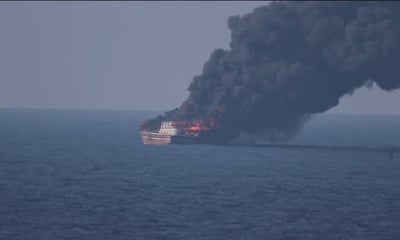
A major security crisis has unfolded across the Arabian Peninsula as Houthi forces in Yemen claimed responsibility for coordinated drone and missile strikes hitting deep inside Saudi Arabia. The claimed operations targeted several vital economic and aviation assets, including oil facilities run by state energy giant Saudi Aramco, the remote Shaybah oilfield, and international airports located in Riyadh and Abha. The sudden wave of cross border military claims has sent shockwaves through international energy markets and corporate circles, directly forcing Saudi authorities to postpone their premier international business summit until next year.
The military announcement was delivered through official statements by Houthi military spokesman Yahya Sarea, who stated that their fighters carried out six coordinated operations targeting Saudi energy, military, and aviation infrastructure over a forty-eight hour window. According to the claims, the first strike hit Aramco facilities in the Red Sea industrial port city of Yanbu, allegedly causing fires inside the complex. A second major attack targeted the vast Shaybah oilfield located in the remote southeastern desert. Additional strikes were directed at King Khalid International Airport in Riyadh, Abha International Airport in the southwest, and various air defense radar installations and military camps across the southern border regions.
The immediate fallout from these security threats landed directly on the international business calendar of the kingdom. Organizers of the Future Investment Initiative, widely known across global financial circles as Davos in the Desert, officially announced that the tenth edition of the summit has been postponed until next year. The prestigious gathering was originally scheduled to open its doors from October 26 to October 29, 2026, in Riyadh, with hundreds of world finance leaders, central bankers, and corporate heads expected to attend. The decision to halt the summit highlights how seriously authorities are taking the safety risks facing the capital city.
The postponement represents a noticeable setback for the economic transformation plans of the kingdom. The annual conference serves as the main global stage for Saudi Arabia to attract foreign investment, showcase mega development projects, and diversify its national economy away from heavy dependence on crude oil sales. Top Wall Street figures, including the chief executive officers of major American investment banks and global asset management firms, had been scheduled to speak on headline stages. However, international corporate leaders privately expressed intense security concerns to organizers after emergency sirens and air defense activity were reported in the skies above the capital city.
For the ordinary residents living in major urban centers like Riyadh and Abha, the renewed cross border attacks have brought back feelings of deep anxiety. Over recent days, air defense batteries have been active in intercepting incoming aerial projectiles, leaving loud sonic booms and smoke trails visible from neighborhood streets. Families living near municipal airports reported flight disruptions, ground delays, and sudden diversions as air traffic controllers worked to keep commercial passenger planes away from active defense zones. The disruption has served as a sharp reminder that the regional conflict can intrude upon peaceful daily life within seconds.
The escalating aerial strikes have also cast a shadow over global energy supply lines. Saudi Aramco operates some of the largest oil production, refining, and export facilities in the entire world, supplying millions of barrels of crude each day to industrial economies across Asia, Europe, and North America. Even minor disruptions or threats of fire at export terminals like Yanbu can instantly rattle commodity trading floors in London and New York, pushing fuel prices higher for drivers and transport businesses worldwide. Energy analysts noted that the persistent targeting of petroleum infrastructure keeps international shipping insurance rates elevated, making maritime trade more expensive.
On the ground in Yemen, the Houthi leadership framed these attacks as a direct response to expanded military campaigns and airstrikes carried out by coalition forces on Sanaa and other northern provinces. Conflict monitors reported that fighting along the western coastline and central provinces had intensified sharply in previous weeks, with competing factions battling for control of strategic transport routes and territorial checkpoints. As ground clashes heat up inside Yemen, long range ballistic missiles and explosive drones are repeatedly used by the group to project military power beyond their borders and pressure regional capitals.
Humanitarian agencies and international diplomats have expressed growing horror at the continuous cycle of strikes and counter strikes that have plagued the region for more than a decade. Millions of ordinary Yemeni families continue to suffer from widespread poverty, food shortages, and broken healthcare systems. When regional infrastructure is bombed and peace initiatives stall, the hope for permanent economic recovery and lasting political reconciliation moves further out of reach, leaving regular citizens trapped in endless uncertainty and fear.
The postponement of the investment summit also reflects a wider chilling effect across the commercial landscape of the Gulf region. In recent months, international trade exhibitions, cultural festivals, and regional aviation summits in neighboring countries have faced cancellations or format changes due to rising military friction. International businesses and tourism companies that rely on a secure, peaceful regional environment are finding it increasingly difficult to schedule multi-million dollar investments when flight paths and maritime lanes face recurrent drone and missile threats.
Saudi defense forces have maintained that their advanced missile defense networks remain on high alert to protect civilian populations, energy refineries, and critical public assets. Military officials emphasized that the kingdom holds the full right to defend its territory, sovereignty, and citizens against unlawful cross border aggression. Security units surrounding oil installations and regional airports have been reinforced with additional patrol squads and specialized radar equipment to detect low flying unmanned aircraft before they reach populated zones.
As the smoke clears over the latest round of claims and counter claims, diplomatic efforts to defuse the dangerous standoff face severe hurdles. International partners have urged all sides to exercise maximum restraint and abandon military escalations that threaten civilian lives and international commerce. The postponement of the Davos in the Desert conference until next year stands as clear proof that economic growth, global finance, and major national projects cannot flourish without genuine, lasting peace on the ground.