
Houthi Ballistic Missile Attack On Yemen Army Camp In Shabwa Kills 53 Recruits And Injures Hundreds During Training Exercise
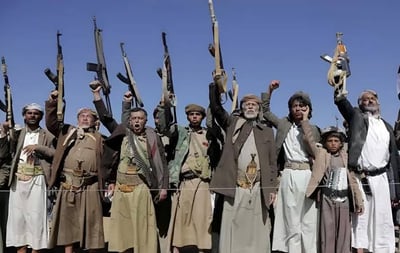
A devastating aerial assault has struck southern Yemen after ballistic missiles slammed directly into a government military base, killing at least fifty-three soldiers and leaving around two hundred others badly wounded. The deadly bombardment targeted the al-Alam military training camp located in the desert province of Shabwa. According to government military spokesmen, the missiles crashed into the center of the facility while hundreds of newly recruited young men were gathered together on an open training field. The attack stands as one of the deadliest single incidents recorded in the country in recent months, shattering hopes for peace and igniting fresh fears of an expanded ground war.
The incident took place during an early morning parade session when hundreds of young recruits had lined up in neat rows for physical conditioning and drill practice. Witnesses on the base recounted hearing loud screaming sounds in the sky, followed almost immediately by three massive explosions that ripped through the open grounds. The force of the detonations sent shockwaves through surrounding barracks, throwing soldiers into the air and scattering twisted metal, concrete fragments, and heavy smoke across the field. In a matter of seconds, an orderly military exercise was transformed into a horrific scene of devastation, screams for help, and burning wreckage.
The young men who lost their lives in the blast had only recently joined the armed forces to help provide security for their communities. Most of the victims were between eighteen and twenty-five years old, having enlisted in the internal police and security forces to earn an honest living and protect public installations in their home province. In a country where years of conflict have wiped out regular jobs and left families without income, joining the government security services is one of the few ways young men can put food on the table for their elderly parents and siblings. Relatives who rushed to the camp gates were left devastated as ambulances carried away the bloodied bodies of their sons and brothers.
Emergency teams and military medical squads worked feverishly through thick dust and smoke to pull survivors from the debris. Local hospitals across the provincial capital of Ataq were quickly overwhelmed by the massive influx of injured soldiers, forcing staff to place patients on mattresses in hallways and waiting areas. Doctors worked continuously without pause, treating severe burns, shrapnel wounds, and broken bones. Health authorities issued urgent appeals over community loudspeakers and mosque sound systems, pleading with local citizens to rush to blood donation centers to help save dozens of recruits who remained in critical condition with severe blood loss.
Official statements confirmed that the attack was executed on Monday, October 19, 2026, when Houthi forces launched three advanced ballistic missiles from positions under their control. Provincial administrators in Shabwa released a strongly worded statement condemning the strike as a cowardly and treacherous act of aggression designed to break the stability of the southern province. Officials warned that the death count of fifty-three remained preliminary and could climb further because several dozen injured soldiers were still battling life threatening trauma in intensive care units.
The leadership of the internationally recognized government reacted with deep fury to the slaughter of its young recruits. Rashad al-Alimi, the head of Yemen ruling Presidential Leadership Council, issued an official statement confirming that the victims were all new recruits undergoing basic defense preparation. He vowed that the government forces would deliver a firm and unyielding response to the perpetrators. Government leaders renewed urgent calls to their international partners and the Saudi-led coalition, demanding the rapid deployment of modern air defense radar and missile interception systems to protect southern bases and civilian towns from incoming aerial weapons.
For their part, Houthi military representatives acknowledged launching the missile attack on the Shabwa facility through their official communication channels. A spokesperson for the group claimed that the al-Alam camp was being utilized as an operational command center by Saudi military officers who assist government forces, asserting without providing direct evidence that foreign officers were among those hit. The strike was framed by the group as part of their wider military operations against government troop movements in southern regions, where territorial control remains fiercely contested.
The strategic importance of Shabwa province explains why the area has become such a violent battleground between rival forces. Shabwa contains rich oil and natural gas reserves, as well as vital export pipelines that run down to the Arabian Sea coastline. In addition, the province sits at an important geographic crossroads connecting government controlled southern ports with central regions. Control over the territory provides essential economic revenues and secures land corridors needed to move fuel and commercial goods. Over recent weeks, military intelligence units reported that rebel forces had already severed key roads connecting Shabwa with neighboring Al-Bayda province, raising concerns that the missile strike could be the opening move of a major ground offensive to seize local energy fields.
The attack has also sent deep shockwaves through regional capitals and global oil markets. In nearby Saudi Arabia, security planners expressed grave concern over the increasing range and precision of ballistic weapons deployed by the rebel movement. The persistent threat of drone and missile strikes against airports, energy refineries, and military installations led regional authorities to make difficult decisions, including the temporary cancellation of high profile international business summits to evaluate security measures. Regional analysts warn that without serious diplomatic restraint, the renewed surge in fighting will pull neighboring states deeper into an expensive and unwinnable war.
For the millions of ordinary Yemeni citizens who have lived through more than a decade of uninterrupted conflict, this latest tragedy brings back deep feelings of heartbreak and exhaustion. The United Nations and international humanitarian charities have repeatedly described the situation in Yemen as one of the worst humanitarian emergencies in the world. Countless families already struggle with hunger, malnutrition, contaminated drinking water, and missing medical supplies. When military facilities are blown up and young wage earners are killed in large numbers, it pushes entire neighborhoods further into poverty and leaves another generation of children without fathers to provide for them.
International diplomats and humanitarian organizations have called for an immediate halt to missile attacks on training camps and populated zones, warning that military escalations only prolong the suffering of innocent people. United Nations officials stressed that the only realistic path to long term security in Yemen is through comprehensive political dialogue where all factions sit down to negotiate a lasting peace agreement. However, with blood still visible on the parade grounds of Shabwa and military commanders promising swift retaliation, the prospects for peaceful reconciliation appear further away than ever.
As funeral prayers are held across southern villages and weeping families bury dozens of young recruits wrapped in white cloth, the atmosphere across Shabwa remains heavy with grief and fear. Security checkpoints have been reinforced with armored vehicles, and patrol units have been ordered to remain on maximum alert along all desert highways. The missile strike on the al-Alam camp has written another tragic chapter in the story of Yemen civil war, proving once again that in this protracted conflict, it is always the young and the vulnerable who pay the highest price.