
How Major Projects In BJP States Always Go To Adani As Group Eyes Huge West Bengal Hooghly Tunnel
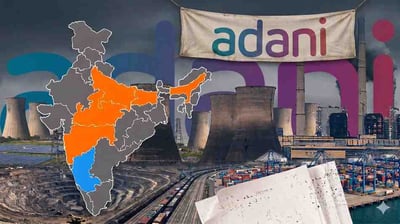
The corporate expansion footprint of the Adani Group has reached a fascinating new flashpoint with its latest expressions of interest in the infrastructure landscape of West Bengal. At the absolute forefront of this strategy is a proposed multi crore under river tunnel project beneath the Hooghly river designed to resolve the long standing traffic congestion gripping Kolkata. A top official from the conglomerate openly confirmed that linking the core metropolis directly with major highway networks via an underwater corridor would drastically streamline heavy cargo logistics. However this sudden expansion push outside their traditional strongholds has once again ignited intense public debate regarding the unique competitive patterns of the company. Across the length and breadth of India a visible trend shows that massive infrastructure assets heavily concentrate within specific geographies creating a recurring pattern where the largest state backed development mandates find their way to this single business entity.
A deep dive into recent public data reveals the extraordinary scale of this geographical concentration particularly when looking at energy and transit sectors. Between March 2024 and January 2026 for instance twelve long term strategic power purchase contracts were bid out across various Indian provinces. Out of these twelve critical long term tenders eight were issued by states explicitly governed by the Bharatiya Janata Party. The Adani Group remarkably swept victory across all 8 of those specific tenders establishing an estimated revenue pipeline of over 13 lakh crore rupees over the next 25 years. From massive thermal power arrangements in Madhya Pradesh and specialized financial incentives in Assam to the mega multi billion dollar Dharavi urban redevelopment project in Maharashtra the corporate giant has systematically built an unshakeable presence across regions run by the central ruling dispensation. Critics frequently point out that this relentless winning streak raises major questions about market dominance and the real nature of domestic corporate competition.
From a strict operational perspective the consistent success of the conglomerate cannot be attributed to political proximity alone but rather a highly calculated combination of aggressive financial bidding and unmatched balance sheet scale. In highly complex engineering setups like the proposed Hooghly river tunnel or deep sea ports smaller domestic firms simply lack the massive capital reserves and global supply chain networks required to qualify for the initial technical rounds. When states like Madhya Pradesh or Maharashtra float mega utility tenders they naturally install strict pre qualification criteria regarding past execution volume and immediate credit access. By utilizing its massive network of ports airports and logistics corridors the corporate giant positions itself as a low risk partner capable of absorbing massive macro economic shocks. This financial dominance effectively creates a structural entry barrier where rival players either back out due to thin margins or find themselves technically disqualified leaving the field entirely open for a single player to execute the mandate.
This evolving investment narrative comes at a highly critical juncture for West Bengal as the local administration restructures its economic plans for the upcoming year 2026. While the newly altered deep sea port plans at Dadanpatrabar in Purba Medinipur and the Hooghly tunnel offer a golden opportunity for industrial revival balancing private corporate power with state sovereignty remains a delicate challenge. The consistent pattern of mega projects moving toward one specific conglomerate underlines a systemic reliance on mega corporations to fund basic national development. While these massive cash injections provide immediate infrastructure upgrades and thousands of local construction jobs they simultaneously increase long term consumer dependence on a centralized private monopoly. As West Bengal evaluates these aggressive corporate overtures the final execution of the Hooghly tunnel will serve as a ultimate test case of whether a non aligned state can successfully extract public utility benefits without falling into the familiar pattern of total corporate capture seen elsewhere.