
White House Seals Historic Deal With Iran To End Long Conflict While Israel Expresses Strong Anger
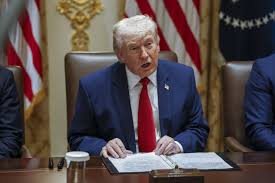
In a stunning geopolitical development that has completely upended global diplomacy, United States President Donald Trump signed a historic 14 point peace memorandum during a formal dinner at the Palace of Versailles in France. This dramatic agreement, finalized on June 17, 2026, aims to bring an immediate and permanent termination to the highly volatile military operations across multiple fronts in West Asia. Under the newly established terms, Iranian President Masoud Pezeshkian co signed the document from Tehran, committing Iran to halting its nuclear escalation by down blending its 440 kilogram stockpile of highly enriched uranium. In return, Washington has promised large scale economic relief by immediately initiating the removal of its intense naval blockade on Iranian ports. This massive breakthrough promises to reopen the vital Strait of Hormuz to toll free shipping for a 60 day period, providing a much needed sigh of relief to energy markets and successfully averting a looming worldwide depression.
However, beneath the celebratory surface of the G7 Summit lies a fracturing alliance that could jeopardize the entire treaty. Israel has made its deep dissatisfaction known to the world, creating a visible rift between Washington and Jerusalem. Israeli Prime Minister Benjamin Netanyahu is openly angry about the concessions made by the Trump administration, viewing the sudden lifting of the naval blockade as a strategic error that could empower regional proxy networks. Despite President Trump reassuring allies that the deal removes Israel of its biggest risk, the Israeli military has defiantly declared that it will ignore the truce terms. Tel Aviv intends to continue its active security operations in southern Lebanon to enforce its own 10 kilometer buffer zone. This immediate resistance proves that signing a piece of paper in Europe does not automatically guarantee stability on the ground when regional actors feel their survival is at stake.
From a critical perspective, the structural foundation of this agreement appears highly fragile and heavily front loaded in favor of Tehran. By granting Iran immediate sanctions relief and allowing it to export crude oil without the previous restrictions, the international community is giving up its strongest leverage before ensuring long term compliance. Critics point out that the memorandum completely fails to address Iran's extensive ballistic missile program, which remains a primary source of anxiety for surrounding nations. Furthermore, the Iranian leadership has already stated that they plan to charge transit fees in the Strait of Hormuz once the initial 60 day window closes, signaling that they still intend to use the strategic waterway as a economic weapon. Relying entirely on a short transition period to iron out complex nuclear verification rules is an immense gamble that could easily backfire if trust erodes.
The ultimate success of this peace pact will depend entirely on upcoming technical negotiations scheduled to take place in Switzerland over the next 60 days. If the United States cannot convince its closest regional ally, Israel, to cooperate with the security framework, the truce may disintegrate before the ink dries. Any sudden military escalation along the Lebanese border or a verification failure by international atomic monitors will plunge the Middle East back into a wider war. For now, the global economy benefits from a temporary dip in crude oil prices, but the geopolitical landscape remains a ticking time bomb. This bold move by the White House represents a high stakes roll of the dice that will either secure lasting global trade stability or trigger an unprecedented regional explosion.