
India First Bullet Train Launch Date Set For August 2027 In Mega Railway Upgrade
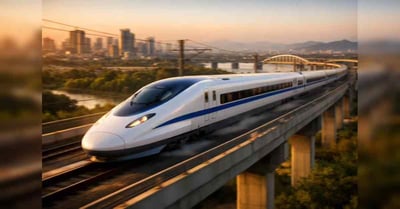
The dream of high speed travel in India is rapidly changing into reality as the country prepares to launch its very first bullet train service. Union Railway Minister Ashwini Vaishnaw officially confirmed that the highly anticipated Mumbai-Ahmedabad High-Speed Rail corridor will begin phased commercial operations on August 15 2027. This mega infrastructure project spans a total distance of 508 kilometers and aims to connect the financial powerhouse of Mumbai with the bustling industrial hub of Ahmedabad. Instead of waiting for the entire length of the track to be completed, the government has smartly chosen a step-by-step opening strategy. The grand journey will kick off with an initial 47 kilometer priority stretch connecting Surat and Bilimora in the state of Gujarat. Local travelers will soon experience flying on the ground as these advanced trains touch operational speeds of 320 kilometers per hour, reducing the full commute time from several exhausting hours down to just 2 hours.
Building this futuristic network is a massive engineering triumph that is completely redefining the urban landscape of the region. The National High-Speed Rail Corporation Limited recently completed a legendary feat by successfully installing all 13 heavy precast portal beams above active, crowded railway lines in Ahmedabad without pausing regular train schedules. The absolute star of this achievement was the final beam set up at the Sabarmati station, which weighed an astonishing 1640 metric tonnes and measured 34.5 meters in length. To ensure smooth connectivity for everyday commuters, the new Ahmedabad bullet train station is being designed as a world-class multi-modal transport hub. Featuring a beautiful architecture inspired by traditional kites, this hub will let passengers switch between high speed rail, local metro networks, city buses, and taxis under a single roof. This thoughtful integration proves that the project is not just about raw speed but also about creating stress-free daily travel for millions of citizens.
While the progress on the ground is highly impressive, a project of this scale naturally invites close observation regarding its financial and long-term targets. The heavy reliance on Japanese Shinkansen technology and funding, backed by a major loan from the Japan International Cooperation Agency covering 81% of the expenses, has safely protected the project from sudden funding shortages. However, initial land acquisition struggles in certain states caused noticeable delays in the early years, which pushed the overall timeline past its original goals. By opening the railway in smaller pieces starting in 2027, the government is trying to prove the real-world value of the train early on to keep public trust high. The success of this first line is absolutely critical because it serves as the ultimate blueprint for the nation. If this corridor performs well financially and wins the hearts of the public, it will set the stage for a nationwide network of high speed tracks.
Looking at the bigger picture, this initial line is merely the opening chapter of a massive transport revolution planned for the whole country. The central government has already shared ambitious blueprints to turn major southern cities like Hyderabad into vibrant high-speed rail hubs by proposing three fresh corridors linking it directly to Pune, Chennai, and Bengaluru. As domestic manufacturing groups like BEML work diligently to deliver the first local train prototypes by early 2027, the project is giving a tremendous boost to internal industrial growth. The coming years will reveal whether high ticket pricing might keep the average daily commuter away, but the sheer social and economic benefits of uniting distinct regional markets cannot be overlooked. By bridging distant cities through unmatched speed and structural innovation, India is firmly on track to establish a modern transport legacy that will power its economic growth for decades to come.