
India Refuses Deadline On Sheikh Hasina Extradition To Bangladesh Citing Structured Legal Process
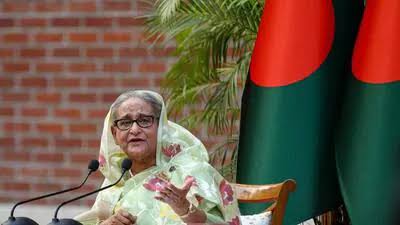
The diplomatic and legal debate surrounding the presence of former Bangladesh prime minister Sheikh Hasina in India has taken center stage once again, with New Delhi clarifying that no fixed timeline or deadline can be given for her return. Speaking to reporters in Dhaka, Indian High Commissioner Dinesh Trivedi stated that the extradition of any individual is not an arbitrary administrative decision that can be hurried, but an established, highly structured legal process that must be reviewed thoroughly in accordance with statutory guidelines and judicial standards.
The envoy’s remarks follow repeated demands from the interim administration and political authorities in Dhaka seeking the handover of the ousted leader to face judicial proceedings. Hasina has been residing in India since August 2024, when she stepped down and left Bangladesh following intense anti-government student agitations and widespread political upheaval. In response to persistent questions regarding how long the review would take, the Indian diplomat reiterated that the Indian government has repeatedly explained that extradition requests require a formal, step-by-step legal procedure involving judicial scrutiny, meaning that setting an artificial deadline is legally impossible.
Trivedi also addressed questions regarding the circumstances under which Hasina arrived in India, clarifying that New Delhi played no role in her initial extraction from Dhaka. He highlighted that she was escorted from her official residence by a Bangladeshi military detachment and arrived in India aboard a Bangladeshi military aircraft. Trivedi stressed that at the exact time of her arrival, Hasina was still the incumbent prime minister of her country. He explained that India, as an immediate neighbor, had an inescapable duty to accept the emerging reality on the ground during a rapidly unfolding crisis.
Reflecting on the decision to grant landing clearance to the flight, the diplomat asked what realistic alternative India had in such an extraordinary moment. He noted that had India refused to grant landing rights to an aircraft carrying a neighboring head of government under immediate threat, the consequences and uncertainty could have escalated unpredictably. Describing the events that led to the change of power as tragic circumstances that should never happen anywhere, Trivedi maintained that India acted with basic diplomatic responsibility and neighborly care in offering shelter during life-threatening chaos.
The issue of Hasina’s extradition remains a major point of friction in bilateral relations between New Delhi and Dhaka. While authorities in Bangladesh have initiated multiple court cases and arrest warrants against the former leader, Indian legal experts point out that bilateral extradition treaties include specific procedural safeguards, including exceptions for political offenses and requirements for prima facie evidence. Until formal judicial processes conclude through competent legal forums, diplomatic exchanges will continue without an immediate transfer.
Despite the strain caused by the political transition, both nations are continuing diplomatic engagements on broader economic and bilateral issues. High-level discussions remain underway regarding high-level visits, cross-border energy trade, essential grain shipments, and border security. The clarification by the Indian mission signals that while New Delhi remains open to bilateral dialogue with Bangladesh, it will not bypass established judicial frameworks or compromise its legal principles to enforce a rushed political repatriation.