
Israel Syria Golan Heights Deal Talks Advance As United States Navigates Historic Sovereignty Impasse And Border Security
A fresh push for diplomatic understandings between Israel and Syria has brought one of the oldest territorial disputes in the Middle East back into international headlines. Quiet negotiations regarding border arrangements, buffer zones, and troop positions along southern Syria have made notable progress on paper. Yet behind the technical maps and military talks lies a massive question that has resisted resolution for decades: the status of the Golan Heights. As American diplomats step in to broker security guarantees between two historic rivals, both governments continue to clash over sovereignty, historical claims, and national defense, raising serious doubts about whether any paper agreement can bridge the divide on the ground.
The Golan Heights is a high rocky plateau overlooking southwestern Syria and northern Israel. During the Six-Day War of nineteen sixty-seven, Israeli armed forces captured the strategic plateau from Syria, later moving to place it under domestic Israeli administration in nineteen eighty-one. The United Nations and the vast majority of countries around the world continue to consider the area occupied territory belonging to Syria under international law. For Syria, recovering the land is an absolute matter of territorial integrity and national honor. For Israel, the elevated terrain provides a vital military barrier that prevents direct attacks against communities in the valleys below, making its physical control a non-negotiable security priority.
Diplomatic movement gained public attention after Syrian foreign affairs officials indicated that both sides had reached broad understandings regarding security zones in southern Syria. The proposed framework focuses on drawing clear boundaries for military units, establishing weapon-free zones, and setting up international monitoring to prevent direct clashes along the frontier. However, officials in Damascus continue to voice strong skepticism about whether Israel is genuinely committed to implementing the agreements, warning that words on paper mean very little if foreign troops continue to operate inside Syrian border areas.
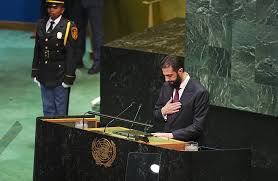
The vast gap between the two sides was put on open display before the global community during speeches at the United Nations General Assembly. Syrian representatives strongly reiterated their sovereign rights over the Golan plateau under international treaties and United Nations resolutions. In direct response, Israeli Prime Minister Benjamin Netanyahu rejected the Syrian position from the podium, pointing to ancient historical and religious ties to the land that stretch back thousands of years. This exchange demonstrated that neither government is ready to retreat from its core ideological position, leaving little room for a permanent political settlement.
This deep-rooted disagreement complicates the role of Washington as a mediator. United States officials face the delicate task of balancing competing security demands. On one side, Israel insists that any regional framework must guarantee that hostile armed groups cannot set up rocket positions or military bases anywhere near its border. On the other side, Syrian leaders refuse to accept an open-ended foreign military presence inside their country, arguing that accepting Israeli control over border security would amount to surrendering basic national sovereignty.
Enforcement remains another major sticking point in the talks. Even if a written framework is signed, both capitals must agree on who will watch over the buffer zones, how violations will be handled, and what steps will be taken if regular Syrian military forces enter southern provinces. Syrian negotiators want clear guarantees that Israel will not retain the right to launch cross-border military strikes, while Israeli security planners insist on having the freedom to intervene if they perceive an immediate threat to their territory.
The practical reality of the talks suggests that Washington may be able to negotiate a temporary security arrangement without resolving the larger question of who owns the land. Similar buffer zones established in earlier decades managed to reduce direct military clashes for long periods, proving that practical rules of engagement can function even without full diplomatic recognition. A working security deal could lower the immediate risk of a wider regional conflict and provide a quiet border for local residents, but it would not mean full normalization of relations between the two neighbors.
Ultimately, solving the Golan Heights problem requires far more than drawing new lines across a military map. A lasting peace will depend on whether both governments are willing to separate day-to-day security cooperation from long-term sovereignty claims. Until Damascus accepts practical security arrangements that do not compromise its dignity, and until Tel Aviv is confident that quiet borders can be maintained without permanent territorial control, the Golan Heights will remain a fragile checkpoint where regional peace and open conflict remain dangerously close.