
Vladimir Putin Warns NATO of Potential Nuclear Response if Russia Kaliningrad Territory Comes Under Attack
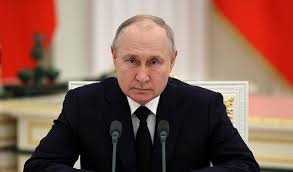
Russian President Vladimir Putin has delivered a stern warning to the North Atlantic Treaty Organization, declaring that Moscow will respond with all available military force if its westernmost territory of Kaliningrad is attacked or cut off from mainland Russia. Speaking during a high-level briefing in Moscow, the Russian leader cautioned Western powers against escalating regional confrontations, pointing out that any direct threat against the strategic exclave could trigger a catastrophic military reaction.
Kaliningrad is a small Russian region situated on the Baltic Sea, separated from mainland Russia and wedged directly between NATO member states Poland and Lithuania. The territory houses the primary headquarters of Russia Baltic naval fleet and is heavily fortified with advanced coastal defenses, anti-aircraft radar shields, and nuclear-capable Iskander missile systems. Due to its unique location inside European territory, the exclave has long been viewed as one of the most sensitive friction points in European security.
Addressing the military balance across the continent, Putin explained that while NATO possesses a combined military force twice the size of the Russian military, Russia holds competitive advantages in its advanced weapons inventory. He acknowledged that European nations such as France and the United Kingdom possess nuclear capabilities, but maintained that no other power matches the specific high-end strategic systems currently deployed by the Russian armed forces.
The Russian leader emphasized that continuous international escalation could push global powers toward an irreversible crisis. He warned that tensions could quickly reach an unexpected point of no return where diplomatic options disappear. Reaffirming that nuclear weapons exist to ensure national survival, he stated that the world cannot simply assume catastrophic arms will never be used, urging Western governments to act responsibly and avoid policies that test Moscow red lines.
The warning follows a formal written communication sent by Russian defense officials to NATO headquarters, raising concerns over recent Western military activities and naval exercises conducted across the Baltic Sea. Russian authorities warned that any calculated effort to block sea lanes, disrupt land transit corridors, or isolate the people and economy of Kaliningrad would be treated as an act of direct aggression against the sovereign territory of the Russian Federation.
NATO leadership moved quickly to reject Moscow accusations and condemned the warning as dangerous political pressure. Alliance spokesperson Allison Hart confirmed that Western officials received the written message and responded by reiterating that NATO operates strictly as a defensive alliance. She emphasized that allied exercises and naval surveillance missions pose zero offensive threat to any Russian territory, urging Moscow to halt irresponsible nuclear threats.
European military planners have kept a close watch on the Baltic corridor, conducting defensive patrols under initiatives like Operation Baltic Sentry to monitor underwater internet cables and energy pipelines. Western defense analysts note that because Kaliningrad contains long-range missile platforms capable of striking deep into European capitals, the exclave naturally remains central to defensive planning in the event of wider regional hostilities.
Despite the sharp exchange of warnings, Putin indicated that diplomatic conversations remain possible under appropriate conditions. He expressed openness to holding a future trilateral summit alongside Chinese President Xi Jinping and United States President Donald Trump, provided that clear agendas are settled in advance. However, the Russian president insisted that as long as security threats persist near Russian borders, his armed forces will remain on high alert to defend every piece of national territory.