
Spain Housing Crisis Protests Trigger Snap Election Call As Conservative Lawmakers Reject Crucial Tenant Relief Bill
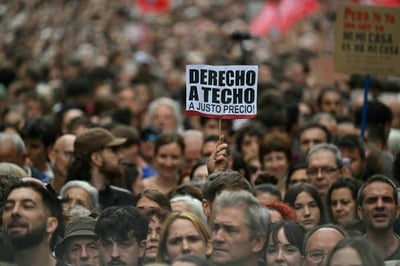
Tens of thousands of demonstrators took over the streets of Madrid and other major cities across Spain, voicing furious anger over soaring rent prices and a deepening national shortage of affordable homes. The widespread public outcry erupted right after conservative lawmakers in parliament voted down crucial government decrees designed to protect ordinary tenants from eviction and cap runaway rental charges. Carrying handmade signs, chanting slogans against property speculation, and waving banners, citizens packed central avenues to demand that housing be treated as a fundamental human right rather than an investment product for corporations.
The mass demonstrations were heavily fueled by the recent eviction of an eighty-seven-year-old grandmother, Maricarmen Abascal, who was forced out of her long-time flat in central Madrid after decades of quiet residency. The image of an elderly woman losing her home to property investors provoked instant outrage among working families, university students, and community organizers. Protesters quickly set up a tent camp in the heart of the capital, spending days outside official buildings to demand permanent legal protections for vulnerable renters who face steep rent hikes they simply cannot afford to pay.
Inside parliament, Prime Minister Pedro Sanchez put forward two emergency decrees intended to provide immediate relief to struggling households. The government plan proposed the automatic renewal of existing tenancy contracts, placed strict limits on evicting vulnerable families, and sought tighter rules on short-term holiday apartments that take living space away from local residents. However, because Sanchez leads a fragile minority coalition, the government depended on votes from other parties to pass the measures into law.
Conservative and right-wing political parties joined hands to block the housing plan entirely. Opposition lawmakers argued that placing price controls on rents and restricting evictions would discourage property owners from renting out homes, ultimately shrinking the supply of flats and harming the market. The defeat of the measures dealt a heavy blow to the left-wing administration, proving once again how difficult it has become for the government to pass major laws through a deeply divided assembly that has operated under old national spending plans for years.
Facing growing street anger on one side and a blocked parliament on the other, Pedro Sanchez took a dramatic political gamble by calling an early general election. Rather than waiting for the regular legislative term to finish in late twenty twenty-seven, the prime minister announced that national voting will be brought forward to November twenty-nine. Sanchez framed the upcoming ballot as a clear moral choice for the country, asking voters whether they want a society that protects ordinary families from greedy real estate funds or one run by conservative leaders who side with wealthy property owners.
The snap election brings significant risks for the ruling left-wing coalition. Recent opinion polls show the main conservative opposition Popular Party holding a steady lead over the ruling Socialists, with conservative leaders betting that voter frustration over high living costs will help them secure power. Political opponents have blamed the government for failing to build enough new houses, arguing that the prime minister called an early election merely to save face after suffering an embarrassing legislative defeat in parliament.
For the young people and working families marching through Spanish cities, the political campaign will be judged entirely on how it handles housing realities. Over the past decade, rental costs across major urban centers like Madrid, Barcelona, and Valencia have climbed at double the rate of average wages, forcing young workers to spend well over half their monthly pay just to keep a roof over their heads. The rapid spread of unlicensed tourist rentals has further driven families out of traditional neighborhoods, turning the housing squeeze into the most urgent domestic issue in the country.
The coming weeks will turn Spain into a fierce political battleground where housing policy takes center stage. While conservative politicians prepare to campaign on deregulation and tax cuts, tenant unions and student groups have promised to keep pressure alive in the streets until permanent tenant rights are guaranteed. By bringing the election forward to late November, the Spanish electorate will decide directly whether the housing crisis leads to progressive market protections or a sharp shift toward conservative governance.