
Indian Cartoonists Face Digital Censorship As Modi Government Issues Takedown Orders Across Social Media Platforms
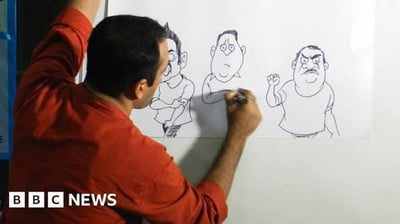
Political cartoonists across India are facing severe digital curbs on their work after social media platforms began restricting profiles and taking down posts following legal notices issued by the Narendra Modi led central government. Satirical artists who moved their work to the internet to reach millions of young readers are suddenly finding that local audiences cannot see their sketches. Big technology platforms like Instagram and X have sent notices to illustrators stating that their content has been restricted inside India to comply with official directives issued by law enforcement and central government departments.
For decades, political cartoons served as a daily mirror for Indian democracy in morning newspapers. A single drawing with a witty sentence could challenge major policy decisions, explain complicated events, and question powerful leaders in seconds. When space for independent satire in conventional print media shrank over recent years, seasoned artists took their work directly to online networks. On platforms like Instagram and Facebook, artists built large, engaged audiences without needing approval from newspaper editors or media owners. That very digital independence is now being challenged by official administrative orders.
The sudden rise in curbs became obvious when prominent political cartoonist Satish Acharya found his entire Instagram profile completely withheld for users in India. The restriction meant that anyone searching for his handle or trying to open his profile link from an Indian internet connection received an error notice saying the account was unavailable in the country due to a legal demand. Days later, another renowned cartoonist, Manjul, discovered that one of his recent drawings criticizing the Election Commission had been restricted by the platform following an order from central law enforcement agencies.
Artists say the biggest challenge is the lack of clear explanation behind these removal notices. When social media companies hide an account or a specific post, the creators receive standard automated messages citing the Information Technology Act and associated rules. These notices rarely state which specific law was violated or what part of the drawing was found unacceptable. Cartoonists argue that this system operates like secret censorship because artists are given no prior warning, no written details of the complaint, and no real chance to defend their artistic work before an independent judicial authority.
The legal mechanism behind these blocks relies heavily on Section 69A and Section 79 of the Information Technology Act. Under these provisions, central government agencies possess the power to direct intermediaries to remove public access to online content in the interest of national sovereignty, defense, state security, or public order. While these rules were originally framed to stop severe criminal threats, digital rights experts and legal scholars point out that they are increasingly deployed against peaceful political satire, journalistic commentary, and everyday opinions that question ruling authorities.
Social media corporations are also under increasing legal pressure to comply quickly with executive requests. Under Indian digital guidelines, digital platforms risk losing their safe harbor protections if they do not act on state takedown demands within strict deadlines. To avoid legal liability, companies have set up direct digital channels with state authorities, which automatically flag and restrict disputed content inside Indian borders. As a result, global audiences outside India can still view the political cartoons, while citizens inside the country find the same links blocked.
The curbs have drawn strong condemnation from civil society groups, opposition leaders, and international press watchdogs. Critics argue that political satire has always been a core part of free speech and open debate in a healthy democracy. Leaders across history have had their actions caricatured by cartoonists without treating lighthearted drawings as threats to public safety. When an administration treats humorous sketches and critical illustrations as illegal material, it sends a chilling message to independent creators and working journalists nationwide.
For the cartoonists, the restrictions directly hit their creative freedom and everyday livelihood. Reaching an audience is essential for independent creators who rely on public engagement to share their art. While artists continue to publish their work on alternative platforms and challenge these removal orders publicly, the growing use of takedown notices highlights an increasingly difficult environment for digital speech in India.