
Indian Diaspora Across World Stages Anti CEC Protests Calling Jantar Mantar Is Everywhere After Huge Demonstrations In Delhi
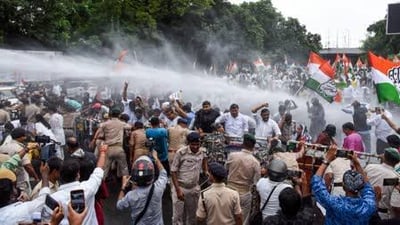
Massive demonstrations questioning electoral transparency in India have crossed international borders as thousands of Indian citizens and global allies gathered across major cities worldwide under the shared rallying call of Jantar Mantar is Everywhere. The international gatherings took place in direct solidarity with large-scale citizen protests in New Delhi, where public groups have been demanding accountability, clean voter lists, and the resignation of Chief Election Commissioner Gyanesh Kumar. From the streets of Europe and North America to public squares in Australia, the diaspora staged peaceful rallies, waving national flags, reciting the Indian Constitution, and calling for an immediate end to official actions against peaceful demonstrators back home.
The wave of international rallies was triggered by rising public anger surrounding the Special Intensive Revision of electoral lists conducted by the Election Commission of India. Protesters allege that the controversial voter revision exercise led to the widespread deletion and arbitrary removal of millions of eligible citizens from official voter rolls, disproportionately impacting working-class voters and marginalized communities. When mass public rallies gathered at the historic protest hub of Jantar Mantar in New Delhi to question these exclusions, security forces responded with harsh measures, including preventive arrests, heavy barricading, detention of political workers, and clashes on the streets. The severity of that police crackdown sparked an immediate reaction from overseas Indians who felt compelled to speak out on the international stage.
The global coordination spread rapidly across more than a dozen major international metropolitan centers. On the sixteenth and seventeenth days of the month of October, crowds gathered in front of iconic landmarks and diplomatic posts in London, Berlin, Dublin, The Hague, Gothenburg, Helsinki, Prague, Toronto, Vancouver, Montreal, New York, Los Angeles, Chicago, and Philadelphia. Demonstrators held up placards reading Restore the rolls, Protect the vote, and Defend Indian democracy, echoing the core demands of the crowds on the streets of New Delhi. Organizers stressed that while they reside thousands of miles away from their homeland, their constitutional duty to safeguard Indian democratic principles remains absolute.
In London, hundreds of students, working professionals, and community activists gathered outside the Mahatma Gandhi statue at Parliament Square. Carrying the Indian tricolor and handwritten posters, the gathering chanted slogans demanding complete transparency in the electoral system and calling for the stepping down of the Chief Election Commissioner. Speakers addressed the crowd, emphasizing that free and fair elections form the single most vital pillar of any constitutional republic, and warning that excluding eligible citizens from voter rolls strikes at the very heart of democratic legitimacy.
A similar passionate scene played out in North America, where hundreds of people gathered outside the Consulate General of India in Toronto. Participants joined voices to chant slogans declaring that every household would become a Jantar Mantar until democracy was firmly protected. The assembly included readings of the Preamble to the Constitution of India, performances of revolutionary poetry, and open mic discussions addressing the detention of young activists and political organizers in the national capital. Community members highlighted that holding peaceful demonstrations in democratic host nations allowed them to shine an international light on the democratic struggles faced by their families and peers in India.
In the Netherlands, more than one hundred and fifty protesters assembled directly in front of the International Court of Justice at The Hague. The demonstration began with a collective recitation of the Indian Constitution, with speakers reminding onlookers that democratic rights must be defended without fear. Meanwhile, in Dublin, Ireland, protesters gathered at the Spire monument under the banner of South Asia Collective Ireland, demanding the total withdrawal of the controversial voter revision exercise. Despite brief attempts by small counter-groups to interrupt the event, local police ensured that the assembly continued smoothly, allowing organizers to deliver their message of solidarity.
Community organizers in these global hubs have emphasized that their movement transcends party lines. Rather than promoting any specific political faction, the diaspora participants insist that their primary loyalty is to constitutional integrity, institutional independence, and the sacred right of every citizen to cast a vote without bureaucratic obstruction. Many highlighted the personal anguish of watching news reports from home showing young students, legal defenders, and independent reporters being pulled into police custody simply for questioning official voter lists.
The government and the Election Commission of India have maintained that the revision of electoral rolls is a routine, lawful, and necessary exercise designed to cleanse voter directories of duplicate entries and deceased persons. Authorities have repeatedly dismissed allegations of biased deletions as baseless political propaganda, arguing that proper administrative appeal processes are available for any voter who finds their name mistakenly omitted. Furthermore, law enforcement agencies in Delhi defend their crowd management actions by claiming that unauthorized public gatherings in high-security zones create public disorder and must be handled firmly to maintain traffic and urban peace.
However, the rapid spread of the Jantar Mantar is Everywhere movement demonstrates that official explanations have failed to ease growing concerns. International civil society networks, legal watchdogs, and global media outlets have begun tracking the dispute closely. By taking to public avenues across the world, the Indian diaspora has shown that geographical borders cannot quiet the demand for institutional transparency, creating sustained global attention that the authorities in New Delhi cannot easily ignore.
The historic mobilization of overseas Indians underlines a deep truth about modern democracy. A public protest hub is not merely a single physical street corner in New Delhi; it is an enduring spirit of civic awareness, democratic courage, and peaceful dissent. As demonstrations continue both across Indian states and throughout major global capitals, the call for clean elections and institutional accountability stands as a powerful reminder that the health of a democracy belongs to the people who believe in it.