
Iran Hardliners Accuse Civilian Leaders Of Soft Coup As Mojtaba Khamenei Remains Absent On July 19 2026
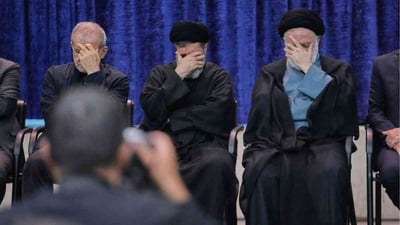
A fierce political power struggle erupted across the highest corridors of governance in Tehran on July 19 2026, revealing severe internal fracturing within the Islamic Republic. Following a contentious ceasefire agreement negotiated with the United States, ultra conservative hardline factions publicly accused senior civilian leaders of orchestrating a soft coup to consolidate authority. Hostility broke out openly during public ceremonies in Tehran, where angry crowds targeted President Masoud Pezeshkian with chants of "death to the compromiser," while Foreign Minister Abbas Araghchi was pelted with stones and forced to flee the venue after being branded a traitor. The intense public anger underscores a growing divide between pragmatic government administrators trying to manage wartime strain and radical political elements demanding total military confrontation.
At the center of this domestic crisis is the prolonged public absence of Mojtaba Khamenei, who succeeded his father Ayatollah Ali Khamenei after the late Supreme Leader died during US-Israeli airstrikes on February 28 2026. Mojtaba Khamenei has not made a single public appearance or delivered a live address since taking office, relying entirely on written communications while remaining in undisclosed locations for security reasons. Taking advantage of this vacuum, hardline lawmakers like Mahmoud Nabavian issued public warnings alleging that civilian leaders are systematically sidelining traditional revolutionary bodies. Conservative figures assert that President Pezeshkian, Parliament Speaker Mohammad Bagher Ghalibaf, and Foreign Minister Araghchi are bypassing constitutional authority and ignoring the directives of the Supreme Leader to finalize diplomatic deals with Washington.
The backlash stems from hardline anger over what they describe as a national surrender, arguing that signing a memorandum of understanding with President Donald Trump betrayed the revolutionary legacy of the state instead of avenging the death of the late leader. Far-right groups like the Paydari Front organized nightly street demonstrations and mounted public campaigns against the accord, claiming it fails to secure binding compensation or full control over the Strait of Hormuz. In response, the governing administration moved decisively to curb radical opposition by removing vocal critics like Nabavian from Parliament's National Security Commission. However, the breakdown of the fragile truce and the resumption of cross-border military strikes in the Persian Gulf have further emboldened hardliners to call for an immediate end to diplomatic talks and direct strikes against Western assets.
Analyzing these internal developments highlights how prolonged warfare and leadership vacuums severely threaten state cohesion. When a Supreme Leader remains hidden from public view during a national crisis, the traditional balance of power shifts rapidly toward civilian executives and military commanders operating on the ground. By labeling diplomatic compromises as a soft coup, hardline factions are attempting to delegitimize the government and force a return to open warfare. However, with the Iranian economy under extreme pressure and vital maritime routes blocked, the civilian leadership faces the difficult task of balancing domestic hardline resistance with the urgent necessity of preventing total state collapse.