
Iran Launches Intense Missile And Drone Barrage Across Gulf States Following Heavy American Strikes
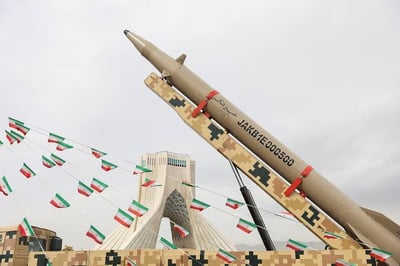
The volatile security environment in the Middle East has degraded into an absolute crisis following a massive exchange of heavy military strikes between American and Iranian forces. On July 12 2026, the Islamic Revolutionary Guard Corps launched at least 3 separate waves of highly destructive ballistic missiles and explosive combat drones directly toward multiple neighboring Persian Gulf nations. According to verified field reports, the unexpected aerial bombardments targeted key United States military facilities located inside Bahrain, Kuwait, Qatar, Jordan, and Oman. The sudden outbreak of regional hostilities was triggered after Iran struck a commercial cargo vessel passing through the vital Strait of Hormuz, forcing the crew to abandon ship as it caught fire. In direct retaliation, United States Central Command executed a massive air campaign, dropping precision payloads on approximately 140 distinct Iranian military assets including active missile launchers, radar installations, and drone storage points across southern Iran.
This massive kinetic escalation has completely shattered a temporary, fragile ceasefire agreement that had been negotiated by international diplomats just weeks prior on June 17. The regional defense network was pushed to its limits on Sunday as air defense sirens echoed throughout several major Gulf capitals. Local military authorities in Kuwait confirmed that their domestic air defense interceptors successfully engaged multiple incoming threats over border outposts and vital offshore oil infrastructure. Simultaneously, the United Arab Emirates and Qatar, which had stayed relatively safe from direct kinetic hostilities since the spring months, reported engaging numerous low flying drone patterns and cruise missiles near their territorial boundaries. In the wake of these explosive strikes, Tehran officially announced that the Strait of Hormuz will remain completely closed to all international maritime traffic until American military interventions in the immediate region come to a permanent halt.
The current military strategy highlights a deeply dangerous calculation where attempts at establishing deterrence are instead accelerating a wider multi nation war. By expanding its strike parameters to hit American bases located within neutral neighboring territories, Iran is attempting to pressure its neighbors into denying Washington the use of their domestic airspace and military infrastructure. Tehran is effectively warning its neighbors that collaboration with western forces comes with immediate, destructive consequences for their own domestic stability. However, this highly aggressive approach is highly likely to backfire, as it forces regional Arab states to deepen their defense alignment with the West rather than step back from the conflict. The total collapse of the UN backed diplomatic memorandum within a matter of weeks clearly illustrates that short term ceasefires are completely ineffective when neither side is willing to compromise on the ultimate control of the strategic global energy shipping waterways.
The immediate fallout of this massive military escalation is already dealing a heavy blow to the stability of the global energy market and international supply chains. United Nations Secretary General Antonio Guterres has expressed deep panic over the catastrophic financial consequences of these active hostilities, noting that roughly 6000 civilian seafarers currently find themselves entirely stranded aboard commercial vessels trapped inside the conflict zone. Global oil markets reacted instantly to the sudden closure of the shipping lane, causing international crude futures to surge by more than 3.5 percent within the opening hours of trading. With the United States military pledging to launch even more waves of air strikes to hold Iranian forces fully accountable, the window for a peaceful diplomatic resolution is rapidly closing. If neutral global powers fail to urgently bring both sides back to the negotiating table, this current cycle of direct retaliation could permanently reshape the geopolitical structure of the Middle East.