
Iranian Drone Strike Sets Kuwaiti Power Plant Ablaze As Regional Conflict Escalates On July 19 2026
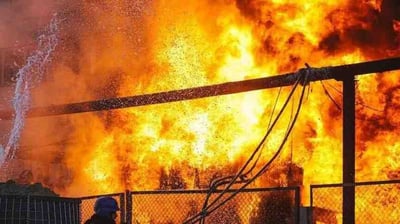
Thick black smoke billowed high into the sky over Kuwait on July 19 2026, creating a terrifying visual marker of a rapidly broadening regional war. For the second consecutive day, an essential power generation and water desalination plant in Kuwait was struck during a barrage of Iranian drone and missile salvos. Firefighters and emergency responders raced against time to contain the growing blazes as power generation units were abruptly deactivated to prevent a catastrophic grid failure. For the millions of civilian residents living in the desert nation, where freshwater and electricity depend entirely on these industrial facilities, the sight of burning infrastructure brought a visceral sense of vulnerability and fear.
This dramatic escalation directly follows an eighth consecutive night of heavy airstrikes launched by the United States against Iranian targets. Operating from several regional bases, American military assets have repeatedly struck Iranian installations, prompting Tehran to retaliate by targeting Gulf neighbors that host American troops and facilities. Iran openly claimed responsibility for strikes across the region, asserting that its forces targeted a US ammunition depot at Camp al-Adiri and air defense radars at Ali Al Salem airbase in Kuwait. However, the physical fallout of these strikes landed squarely on dual-use and civilian installations, severely damaging Kuwaiti energy networks and sparking widespread concerns over long-term municipal utility stability.
The human dimension of the crisis unfolded rapidly as air-raid sirens echoed through cities and regional transit halted. Local authorities in Kuwait reported several injuries among emergency response crews and plant workers who were caught in the immediate aftermath of the explosion. State oil operations were evacuated following parallel strikes, while air traffic at Kuwait International Airport faced temporary suspensions and major delays. In markets and residential neighborhoods, panic buying quickly set in, with citizens and foreign workers stocking up on bottled water and canned food as fears grew that critical supply chains and essential water distillation services might suffer prolonged disruptions.
Neighboring Gulf nations experienced similar panic as Iranian retaliation spread across borders. Bahrain air defenses were forced to engage multiple waves of incoming drones and missiles aimed at US military positions, while sirens warned civilians to seek immediate shelter. Iran defended its actions by claiming that allied nations are facilitating host-nation strikes for the United States, a charge that Gulf governments have vehemently denied. In response, Kuwait’s Ministry of Electricity, Water and Renewable Energy strongly condemned the strikes, calling the repeated targeting of vital civil infrastructure a clear danger to the safety of innocent residents.
Examining the trajectory of this confrontation reveals a troubling transition toward total infrastructure warfare. While military installations remain the stated primary targets, the deployment of long-range drones and missile swarms inevitably places delicate civil facilities at immediate risk. Desalination and power plants represent the absolute life support system for the arid Gulf region, meaning any sustained destruction to these sites immediately threatens basic human survival needs far beyond the traditional battlefield. This systemic targeting strategy indicates that as long as retaliatory cycles continue uninterrupted between Washington and Tehran, civilian life across the entire Gulf peninsula will remain exposed to catastrophic collateral disruption.