
JNU Hunger Strike Reaches Day 16 As Student Protest Standoff Intensifies Over Union Rights And Punishments
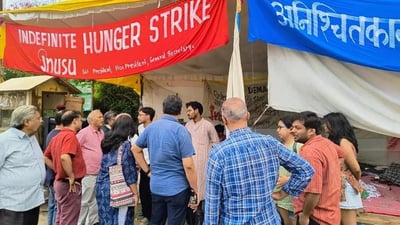
A tense atmosphere continues to grip the Jawaharlal Nehru University campus in New Delhi as an indefinite hunger strike led by protesting students crossed into its sixteenth straight day. The open grounds outside the administrative building have turned into the center of a major standoff that shows no signs of slowing down. Large groups of young scholars have been gathering every evening to show support for their peers who have stopped taking food. Even though continuous protest rallies, solidarity marches, and crowded open air meetings have taken place across the university grounds, talks between both sides remain frozen and the deadlock continues without an immediate solution.
The scene at the protest camp tells a moving human story of personal sacrifice and determination. A small group of young scholars has spent more than two weeks sitting under a makeshift cloth shelter, braving changing weather, mosquitoes, and severe physical weakness. Supporters sit quietly beside them, playing acoustic guitars, singing songs of unity, and holding handmade posters that call for justice. As each day passes without food, the physical toll on the striking students becomes visibly heavier. Walking even a few steps has become an exhausting task for them, yet they insist they will not end their fast until university authorities agree to listen to their voices.
The root of this massive conflict began several months ago, following a major breakdown in communication between the student body and university leaders. Back in February 2026, the administration took the strong step of suspending the elected Jawaharlal Nehru University Students Union. That decision stripped the student representatives of their official standing and cut off the regular channels used by scholars to present their daily problems to top officials. For many students who voted in campus elections, seeing their chosen representatives removed created deep anger and a sense that their collective democratic rights were being ignored by the authorities.
Matters became even more complicated when the administration issued rustication orders and heavy financial fines against several active student leaders. These harsh penalties were handed down following earlier campus demonstrations where students raised questions about university policies. For a student, facing rustication means their research degrees, academic careers, and future job prospects are put in immediate danger. The current hunger strike was launched primarily to demand an unconditional withdrawal of these disciplinary orders, the full restoration of the elected student union, and an end to what students describe as an atmosphere of fear and silence on campus.
In addition to the penalties against student leaders, the protesters have put forward serious questions regarding administrative integrity and university governance. They have openly criticized recent faculty recruitment processes, claiming that qualified candidates were overlooked and that hiring practices lacked clear transparency. Protesting groups also highlight everyday struggles that affect regular campus life, such as leaking hostel roofs, poor sanitation, broken water coolers, and cuts to scholarship funds that help scholars from poor backgrounds complete their higher education. For the demonstrators, the strike is not only about politics but also about protecting the basic living and learning conditions of the entire university.
As the strike entered its sixteenth day on Monday, October 19, 2026, growing health concerns added deep anxiety to the unfolding situation. Doctors and medical volunteers who visited the tent warned that several fasting students were suffering from dangerous drops in blood sugar, dehydration, and irregular blood pressure. Student representatives raised sharp complaints, alleging that the campus health center had not provided adequate emergency care or continuous medical monitoring for the fasting scholars. They expressed serious worry that without timely medical checks, the prolonged refusal of food could cause long term organ damage to the young protesters.
On the other side of the dispute, the university administration has defended its actions and maintained a firm stance against the ongoing demonstration. University Vice Chancellor Santishree Dhulipudi Pandit publicly addressed the situation, stating that discipline must be upheld at all costs within an educational institution. Administrative spokespersons argued that rules had been broken during past disruptions, which made disciplinary measures necessary to maintain order and peace. The authorities also claimed that they were open to legal processes and accused certain protest leaders of politicizing internal university matters to create unnecessary public controversy.
The comments made by the university head drew an immediate and sharp response from the student union. Student organizers rejected the statements of the Vice Chancellor, accusing the administration of running a misleading campaign to turn the public against peaceful demonstrators. The union stated that rather than sitting down to discuss practical solutions with affected scholars, the authorities were busy issuing public statements that hid real campus problems. The students reiterated that they had repeatedly requested formal meetings with senior officials before resorting to an indefinite hunger strike, but their formal letters had received no positive response.
The continued standoff has attracted strong support from faculty members and civil society groups outside the campus gates. Many university teachers expressed deep sympathy for the weakening students and urged both sides to step back from rigid positions. Teachers noted that a university functions best when there is free exchange between learners and managers, rather than administrative orders and police complaints. Several prominent scholars and social activists have visited the university gates to speak at solidarity meetings, warning that allowing the health of students to worsen further could lead to an irreversible tragedy on campus.
The crisis has now reached national political offices as well. Member of Parliament John Brittas from the CPI M took note of the deteriorating health conditions of the students and wrote urgent letters to President Droupadi Murmu, who serves as the Visitor to the central university. The lawmaker also reached out to Union Education Minister Pralhad Joshi, requesting direct central government intervention to resolve the crisis. In his appeal, the parliamentarian pointed out that immediate action was necessary to revoke the harsh rustication orders and protect the lives of young citizens who were risking their health to defend their academic freedom.
Throughout modern Indian history, Jawaharlal Nehru University has occupied a special place as an institution known for lively debate, critical thinking, and social awareness. Students from all economic backgrounds travel from remote corners of the country to study in its libraries and classrooms. For decades, the campus has shown that disagreement can be expressed through peaceful debate and open dialogue. However, the current confrontation shows how deep the divide between modern campus administrations and student communities has grown, turning academic grounds into battlefields of authority and resistance.
As the clock ticks toward another day of the protest, the immediate priority remains the fragile physical condition of the young men and women sitting in the strike tent. Classmates, parents, and teachers are holding their breath, waiting for an announcement that direct talks will finally begin. Everyone agrees that the present deadlock cannot continue forever without serious harm. Finding a peaceful way forward will require administrative leaders to show understanding and willingness to listen, while student representatives must find a safe path to protect their lives and academic futures before it becomes too late.