
Jordan Air Strikes Hit Southern Syria Killing Seven People Following Church Attack As Damascus Shuts Key Border Crossing
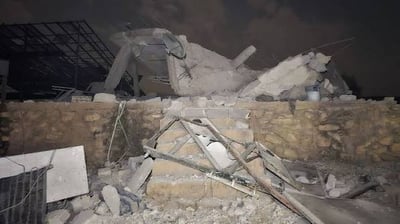
A major military escalation erupted along the shared frontier of Jordan and Syria after Jordanian fighter jets launched air strikes targeting southern Syrian provinces, leaving at least seven people dead and multiple casualties in residential neighborhoods. The military operation was initiated by Amman in direct response to a deadly shooting at a Greek Orthodox church in Jordan that claimed several civilian lives. Following the strikes, Syrian authorities ordered an immediate suspension of all passenger and commercial transportation through key overland crossing points, bringing cross-border trade to a sudden halt and stoking fears of broader instability across the border area.
According to local reports and emergency services from the affected regions, the aerial bombardment hit locations within the southern provinces of Deraa and Suweyda. Explosions shook quiet towns late at night as precision bombs damaged multiple structures believed by military planners to house armed extremist factions linked to cross-border violence. Local provincial officials and medical workers reported that civilian homes were caught in the radius of the blasts, resulting in the deaths of at least seven individuals, including young children and women. Rescue teams spent hours sifting through concrete rubble to extract the wounded and transport them to regional medical facilities.
The military strikes followed days of shock and anger inside Jordan over a violent assault on a church gathering in the southern governorate of Karak. Gunmen had pulled up outside a Greek Orthodox church during a funeral ceremony and opened fire without warning into the crowd, killing seven worshippers and wounding dozens more before escaping. The tragedy triggered public grief across Jordan, with national leaders pledging to pursue the perpetrators wherever they operated. Security agencies in Amman later confirmed that the church attackers maintained active operational ties and logistical support bases across the southern border inside Syrian territory.
The Royal Jordanian Air Force stated that its overnight mission was a targeted retaliatory operation intended to dismantle hideouts and vehicles utilized by terror cells responsible for planning violence against Jordanian citizens. Military spokespersons asserted that numerous militant figures were neutralized during the raid and that Jordan reserves full authority to protect its national territory and places of worship against cross-border terrorism. Jordan has repeatedly raised alarm over rogue armed networks and smuggling operations thriving in southern Syria, warning that security vacuums in neighboring provinces create a direct threat to domestic safety.
In Damascus, Syrian government representatives reacted with condemnation, calling the air raids an infringement of national territorial boundaries. The Syrian Ministry of Border and Customs immediately announced the indefinite closure of the Nasib border post, known on the Jordanian side as the Jaber crossing point. Officials confirmed that both private travel and commercial freight traffic in both directions were halted until security assessments could guarantee the safety of border staff and transit workers. Syrian foreign affairs officials expressed sorrow over the loss of civilian lives and accused Jordan of carrying out unilateral military actions without prior coordination.
The sudden closure of the Nasib crossing presents severe economic complications for regional transit networks. The terminal serves as a primary commercial trade artery connecting Syria and Lebanon to Jordan and onward to major markets throughout the Arabian Gulf. Hundreds of transport lorries carry agricultural crops, manufactured goods, and building materials across the crossing every day. Logistics operators warned that prolonged border closures will cause fresh supply bottlenecks, strand cargo convoys along the highway, and impose financial losses on trading companies operating in the Levant.
Regional diplomats have expressed concern that the border clashes could trigger a cycle of retaliation along a sensitive border zone. Southern Syria has experienced years of unrest, with various armed groups, local militias, and security detachments operating in close proximity. International observers and humanitarian agencies have urged authorities in both Amman and Damascus to open immediate communication channels to de-escalate tensions, ensure civilian safety in border communities, and establish transparent security arrangements that allow vital transport corridors to resume regular operations.