
Mallikarjun Kharge Accuses BJP Of Rojgar Chori Over VB-G RAM G Act And Destroying MGNREGA
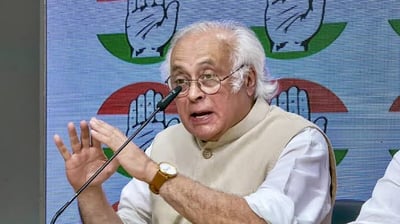
In a sharp political offensive against the Union government, Congress president Mallikarjun Kharge accused the ruling administration of unleashing economic hostility on ordinary citizens by dismantling the landmark Mahatma Gandhi National Rural Employment Guarantee Act. Addressing the national conversation around rural livelihoods, Kharge stated that the central government has used its power like a heavy club, striking not only protesting young job seekers across the nation but also millions of hardworking rural labourers who rely on daily manual work to feed their families. The core of the controversy centers on the recent introduction and implementation of the Viksit Bharat Guarantee for Rozgar and Ajeevika Mission Gramin Act, known as the VB-G RAM G Act. Opposition leaders have branded the new framework as a calculated act of rojgar chori or employment theft, alleging that replacing a statutory entitlement to work with discretionary central programs has devastated the fragile economic safety net built over two decades for India's rural poor.
The immediate fallout of replacing the decades-old guarantee scheme with the new legislation has sent shockwaves through rural communities across the country. Official employment records and independent monitoring data reveal that during the first month under the new framework, job generation dropped dramatically compared to the previous year when the rural employment guarantee was fully operational. Opposition spokespersons highlighted that total person-days of work plummeted by nearly fifty percent, while millions fewer households were able to secure any wage labor at all. Families that previously counted on guaranteed manual work during lean agricultural seasons now find themselves wandering from village offices to local administrative hubs without receiving job cards or work assignments. Kharge pointed out that this steep reduction in work opportunities translates directly to an immediate financial loss for vulnerable households, pushing families already struggling with rising living costs deeper into poverty and debt.
Beyond the drastic reduction in available work, severe financial bottlenecks between the central authority and individual states have worsened the crisis in the countryside. The Congress leadership questioned whether the central government had cleared the massive backlog of pending wage and material payments, amounting to over seventeen thousand crore rupees owed to various states under the previous rural employment framework. Under the newly imposed legislative structure, state administrations are now expected to bear a forty percent financial share of funding for local works, placing an unsustainable burden on regional budgets that are already grappling with resource constraints. Several state governments, including those governed by the ruling party, have voiced strong concerns regarding this revised financial sharing pattern. By withholding past dues while simultaneously shifting heavy fiscal burdens onto state treasuries, the central policy has effectively strangled local development projects and delayed wage disbursements to workers who live from hand to mouth.
This policy shift comes at a time when the rural agrarian economy is already enduring significant stress due to adverse weather patterns and agricultural disruptions. National agricultural reports indicate a shortfall of over twenty-six percent in sowing during the Kharif season, threatening crop yields and reducing agricultural wage opportunities in the fields. Large regions facing drought conditions have reportedly received insufficient central relief assistance, leaving farming communities stranded without adequate disaster support. Under normal circumstances, guaranteed public works provided a crucial seasonal buffer that absorbed surplus farm labor when crops failed. However, with the statutory guarantee removed, small farmers and landless agricultural workers have been deprived of their secondary income stream precisely when climatic shocks have crippled primary farm production.
A central critique raised by civil society advocates and political leaders is the intense centralization of authority embedded within the new legislation. The original rural employment law empowered local Gram Panchayats to assess community needs, plan public works, and grant work on demand, ensuring dignity and democratic governance at the grassroot level. In contrast, the current policy concentrates decision-making power within central ministries, giving federal bureaucrats the discretion to decide which panchayats receive funding and project approvals. Furthermore, mandatory digital attendance tracking, strict biometric authentication, and complex mobile application procedures have erected formidable technological barriers for underprivileged workers in remote areas with poor network connectivity. Rather than streamlining welfare delivery, these rigid technological requirements have systematically excluded elderly, uneducated, and digitally disconnected laborers from claiming their rightful wages.
As political debate over rural economic policy intensifies, opposition parties have vowed to launch sustained public campaigns demanding the full restoration of the legal right to work. Drawing comparisons to past legislative struggles over agricultural policy, leadership figures emphasized that removing economic safeguards pushes rural citizens toward precarious informal labor and bondage. The debate highlights a fundamental difference in governance philosophy, contrasting top-down central management with bottom-up social security guarantees. For millions of laborers in villages across India, the outcome of this political battle will determine whether public employment remains a fundamental economic right or becomes a conditional charity dependent on administrative discretion.