
OVER 63.5 LAKH VOTES MARKED FOR DELETION IN TELANGANA ELECTORAL REVISION DRIVE
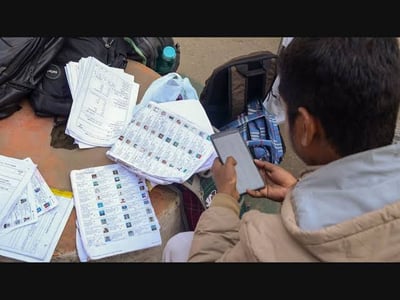
Election authorities in Telangana have flagged over sixty three point five lakh votes for deletion under the absent, shifted, dead, and duplicate category as the enumeration phase of the ongoing special intensive revision of electoral rolls reaches its conclusion. Recent voter roll data indicates a significant spike in flagged entries as booth level officers worked against tight deadlines to finalize field verification across urban and rural constituencies. Alongside the vast number of potential deletions, state polling figures reveal that more than sixty two lakh additional records contain enumeration anomalies and logical errors, including discrepancies in spelling, birth dates, or parental details. Combined, these two categories represent over one crore entries, placing a substantial proportion of the state voter base at risk of exclusion from the draft electoral roll unless citizens quickly rectify missing information or verify their status with local election officials.
The capital city of Hyderabad emerged as a major hotspot for voter discrepancies, showing an unusually high concentration of flagged entries across its fifteen assembly constituencies. Out of the total registered voter count recorded in historical lists, over fourteen lakh entries in the city, representing nearly thirty percent of local electors, have been categorized under the absent, shifted, dead, and duplicate classification. Field reports show that digitisation progress in the district trailed significantly behind state averages, crossing only fifty eight percent completion compared to seventy eight percent achieved statewide. Booth level workers operating in dense urban belts faced severe operational challenges, compounded by consecutive public holidays, forcing field personnel to classify non-responsive households into removal categories to meet administrative timelines.
Election officials explained that the sharp increase in flagged entries stems from non-submission of required enumeration forms by local residents during door-to-door verification visits. In many localities, supervisors instructed field teams to conclude ground-level assessments and process pending administrative entries, rather than repeatedly visiting unresponsive households. While some booth level representatives continued accepting forms up to the official cutoff date, community observers noted that widespread public misconceptions regarding potential deadline extensions led many electors to delay submitting their documents. Advocates working in urban neighborhoods have advised residents who submitted details online to obtain physical acknowledgments or proof from local supervisors, ensuring they hold verifiable evidence should administrative notices be issued during subsequent verification stages.
Despite the vast number of flagged records, election guidelines mandate a structured mechanism for affected citizens to safeguard their voting rights before final electoral rolls are published. Electors who find their names placed on the discrepancy list or flagged for removal will receive formal inquiry notices from local electoral registration officers during the upcoming claims and objections phase. According to official statutory procedures, no voter can be permanently removed from the electoral roll without being provided a fair hearing opportunity. Affected citizens will be required to appear before local registration authorities with legitimate identification, address verification, and demographic proof to resolve logical errors, correct data mismatches, and maintain their active registration status.