
Middle East Security Crisis Leaves Indian Students In Limbo As Overseas Candidate Drags CBSE To Supreme Court Over Withheld Class XII Improvement Result
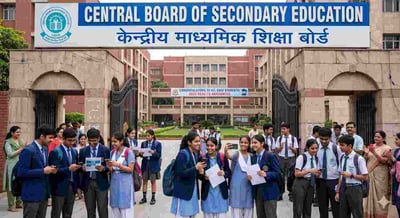
The dreams of an Indian student residing in Saudi Arabia have hit a major roadblock because of geopolitics and bureaucratic delays. Pransu Jigarkumar Patel, a private candidate who appeared for the Central Board of Secondary Education Class 12 improvement examinations from Al Jubail, has officially moved the Supreme Court of India. The legal petition challenges the board for failing to declare his performance outcome after multiple examination dates were abruptly cancelled across several Gulf countries. The cancellations occurred earlier this year when rising military hostilities and severe security threats made it unsafe to host public examinations in nations like Bahrain, Iran, Kuwait, Oman, Qatar, Saudi Arabia, and the United Arab Emirates. While the student managed to sit for his Physics and Chemistry papers, his remaining assessments for Mathematics, English, and Computer Science were called off by the board. To address this crisis, the education board released a specialized evaluation framework on March 27 offering to compute the final marks of affected overseas students using internal school records, including quarterly, half-yearly, and pre-board results. However, when the final board outcomes were published on May 13, this student discovered his status was marked with the stressful acronym Result Later, leaving him completely excluded from the relief scheme.
This administrative lapse has triggered an intense academic emergency for the young aspirant, highlighting a deeper structural flaw in how central institutions manage non-regular candidates. The student had already initiated his transition to higher education by applying for a competitive engineering program focused on artificial intelligence at Dhirubhai Ambani University, even paying the required registration fees. The university set a strict deadline of June 1 for candidates to submit their final qualifying documents. Because his marks remain entirely frozen by the central board, he missed the critical submission window, and his higher education prospects are now on the verge of collapsing. Before knocking on the doors of the highest court, the student and his father made multiple desperate attempts to resolve the issue, sending formal letters on May 17, May 21, and May 30 to regional and central education offices. Their requests were met with complete silence. Even an attempt to seek urgent relief from the Delhi High Court failed when the registry department refused to list the matter before the vacation bench, claiming the situation did not qualify as an emergency, which eventually left the family with no choice but to file a writ petition at the apex court.
The legal arguments presented before the Supreme Court claim that withholding the results is unfair, discriminatory, and violates basic constitutional rights to equality and life opportunities. The core of the issue rests on a highly questionable distinction made by the authorities, where regular classroom students are being granted alternative marking benefits while private improvement candidates face exclusion. This differential treatment feels deeply unjust because the cancellation of the papers had absolutely nothing to do with student choice or academic eligibility, it was entirely dictated by an international security crisis. Forcing a student to suffer a complete gap year simply because of their registration status as a private candidate represents a failure of institutional empathy. The board has a duty to look at the broader picture and protect the futures of its students during global emergencies. The practical solution is surprisingly straightforward since the student completed his regular schooling at the International Indian School in Al Jubail, meaning his verified historical academic records are readily available for data retrieval and score computation.
This legal confrontation brings to light the systemic vulnerabilities faced by the massive network of Indian students pursuing national curricula from international locations. While central boards excel at managing massive student populations within domestic borders, their crisis response mechanisms for overseas centers frequently lack the necessary flexibility and speed. When geopolitical conflicts disrupt standard schedules, foreign-based Indian citizens find themselves trapped in complex jurisdictional vacuums, left at the mercy of delayed notifications and rigid classification systems. Moving forward, education authorities must establish inclusive emergency assessment protocols that treat regular and private students equally during geopolitical crises. The Supreme Court now holds the responsibility to step in and set a progressive precedent, ensuring that administrative delays do not ruin the hard work and career aspirations of Indian students living abroad.