
Modis Refusal To Take Query From Norwegian Journalist Sparks Fierce Global Debate On Medias True Role In A Modern Democracy
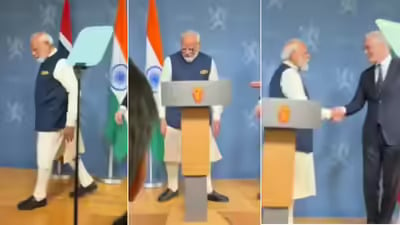
A routine diplomatic state visit has rapidly transformed into a fierce international shouting match regarding the freedom of the press and the limits of political reporting. The global controversy erupted in Oslo, Norway, following a joint diplomatic media briefing held by Indian Prime Minister Narendra Modi and his Norwegian counterpart, Jonas Gahr Store. As both heads of state concluded their prepared reading of bilateral agreements and began exiting the podium stage, local journalist Helle Lyng from the Oslo based newspaper Dagsavisen called out across the room, asking why the Indian leader refused to take questions from the freest press in the world. The sharp confrontation was captured clearly on video and spread exponentially across digital networks, immediately drawing millions of impressions and triggering a deeply polarized debate over the prime minister's historical reluctance to engage in unscripted media question sessions.
The immediate fallout from the viral clip exposed deep ideological divisions between the state administrative apparatus and international media practitioners. Seeking to address the brewing public relations issue, the Embassy of India in Norway publicly invited Lyng to a formal Ministry of External Affairs press briefing held later that evening at the Radisson Blu Plaza Hotel. However, the subsequent meeting quickly escalated into an incredibly tense verbal showdown when Lyng directly challenged diplomats on India's human rights track record and pressed for assurances on democratic protections. Ministry of External Affairs Secretary West Sibi George delivered a highly aggressive institutional defense, pointing to India's massive democratic scale and historical achievements while firmly advising foreign critics to stop forming biased opinions by relying blindly on reports generated by ignorant non governmental organizations. The friction intensified further when the journalist reportedly attempted to talk over the official responses, prompting the secretary to firmly remind her that while she possesses the right to ask questions, she cannot dictate the exact manner of the answer.
As the controversy gained massive traction online, the domestic political landscape in India split sharply along predictable partisan lines. Main opposition figures, prominently led by Lok Sabha Leader of the Opposition Rahul Gandhi, seized upon the viral footage to launch a coordinated attack on the prime minister's global public image, asserting that the quick exit from the podium demonstrated an institutional panic and a fear of transparent public accountability. In response, the media management wing of the ruling Bharatiya Janata Party, spearheaded by IT cell chief Amit Malviya, launched a fierce counteroffensive. Government defenders argued that the joint media statement was a strictly managed protocol event where neither global leader was scheduled to interact with reporters, labeling the opposition's reaction as an attempt to amplify the incoherent rants of a delinquent journalist who was simply chasing personal viral fame at the expense of standard international decorum.
The online environment quickly degenerated into extreme hostility as pro government internet commentators subjected Lyng to intense digital scrutiny, going so far as to baselessly label her a foreign intelligence spy or a puppet operating under hostile external directives. Lyng vehemently defended her professional integrity in subsequent social media updates, clarifying that she is an ordinary domestic journalist doing her job under Norwegian reporting traditions, which routinely encourage pressing world leaders for direct accountability. This dramatic episode highlights a profound structural evolution in modern political journalism, where the performative act of confrontation often completely eclipses the substantive discipline of listening. By prioritizing a highly curated viral moment over the established protocols of diplomatic press briefings, the interaction demonstrates how modern media narratives are increasingly manufactured for algorithmic engagement rather than the nuanced pursuit of institutional truth.