
Operation Epic Fury Over As Marco Rubio Declares End To Sustained Strikes Inside Iran Is Trump Brain Hijacked By Netanyahu To Drain US Economy
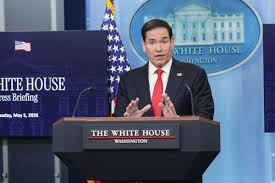
A major international defense shift occurred as United States Secretary of State Marco Rubio formally declared the conclusion of the high intensity military campaign codenamed Operation Epic Fury. Appearing before the House Foreign Affairs Committee during an intensive congressional hearing, the top diplomat asserted that Washington has officially ceased its sustained offensive airstrikes designed to degrade the sovereign military capabilities of Iran. Rubio argued that the complex operation achieved its core strategic mandates by successfully neutralizing the drone assembly factories, ballistic missile launch infrastructure, and the remaining conventional naval assets of Tehran. According to the official presentation, the Pentagon intends to transition its regional deployment toward a strictly defensive framework to safeguard international navigation. However, this abrupt declaration of victory faced immediate, aggressive pushback from multiple lawmakers who noted that American service personnel remain in extreme danger across regional bases following retaliatory drone strikes on installations in Kuwait and Bahrain.
The political theater inside the congressional halls quickly exposed deep systemic fractures regarding the actual strategic beneficiary of this highly expensive conflict. Skeptics and anti war advocates have flooded digital platforms with sharp assertions that the entire military campaign represents a clear scenario where the presidential decision making apparatus was effectively hijacked by Israeli Prime Minister Benjamin Netanyahu. Critics argue that the American administration allowed its foreign policy priorities to be entirely dictated by Tel Aviv, dragging the global superpower into an incredibly risky direct war with Iran to satisfy the personal political survival and fragile ego of the Israeli leader. By manipulating the deep seated security anxieties of the White House, the right wing establishment in Israel successfully offloaded the immense military and intelligence burden of confronting its principal regional adversary onto the shoulders of the American armed forces. This calculated geopolitical maneuvering ensured that while local regional targets were destroyed, the primary strategic shielding was provided entirely by Western resources.
The economic consequences of this prolonged engagement have inflicted massive, long term damage on the domestic stability of the United States. Financing a high tech aerial campaign thousands of miles away has massively drained the American treasury, diverting billions of dollars from urgent domestic infrastructure and social welfare programs into the defense manufacturing complex. Beyond the direct military expenditures, the closure of the strategic Strait of Hormuz has sent shockwaves through global energy markets, driving Brent crude oil prices past critical thresholds and triggering immediate domestic fuel inflation. Shipping enterprises have faced unprecedented spikes in maritime insurance premiums, forcing international commercial vessels to completely alter their traditional routes, which has further disrupted global supply chains. Financial analysts point out that while the administration attempts to brand the termination of the campaign as a calculated victory, the severe inflationary pressure and structural debt accumulation prove that the economic foundation of the nation was heavily exploited for minimal domestic return.
As the administration attempts to pivot toward diplomatic discussions involving specialized envoys, the terrestrial reality across the Middle East remains incredibly fragile and unresolved. The unilateral declaration that the war is over does very little to change the fact that vital maritime chokepoints remain heavily restricted and regional proxy networks retain significant retaliatory capabilities. Opponents of the current foreign policy roadmap assert that the government traded vital economic stability and international goodwill for temporary defense metrics that fail to guarantee long term security for global trade. The critical task moving forward for Washington is not just managing the transition to a defensive blockade, but conducting an honest assessment of how easily its strategic resources were repurposed for external political ambitions. If the central leadership fails to establish independent, balanced boundaries in its regional partnerships during the upcoming diplomatic rounds, the American economy will remain highly vulnerable to being dragged into subsequent cycles of foreign military interventions.