
Russia Launches Deranged Hypersonic Missile Attack On Kyiv Striking Water Facility And Schools In Crucial Conflict Escalation
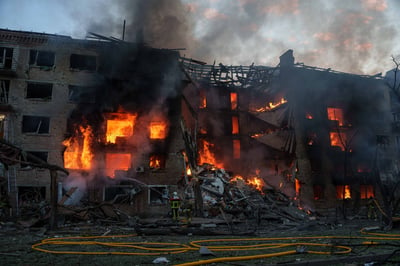
The fragile stability of the Ukrainian capital was shattered over the weekend as Russian forces unleashed one of the largest and most destructive aerial bombardments since the inception of the conflict. In a relentless barrage lasting over seven hours, Moscow deployed an unprecedented combination of approximately six hundred strike drones and ninety advanced missiles to overwhelm local air defense systems. The primary focus of this intensive assault was Kyiv, where residents were awoken in the early hours of Sunday by the terrifying sounds of detonations and falling debris. Ukrainian President Volodymyr Zelensky quickly condemned the operation, labeling the aggressive strategy as genuinely deranged after verification emerged that three missiles directly impacted a critical municipal water supply facility, while other detonations completely gutted a central commercial market and heavily compromised dozens of residential apartment complexes and multiple primary schools.
The true gravity of the escalation lies in the nature of the weaponry utilized by the Kremlin during the assault. The Ukrainian Air Force and international intelligence agencies confirmed that Russia deployed the highly controversial Oreshnik hypersonic intermediate range ballistic missile, marking only the third time this specific nuclear capable asset has been utilized in active warfare. President Vladimir Putin had previously boasted about the unstoppable speed and immense kinetic energy of the Oreshnik system, which was reportedly directed toward the town of Bila Tserkva just southwest of the capital. Despite the Ukrainian forces successfully intercepting a vast majority of the incoming drones and cruise missiles, the sheer velocity of the ballistic elements allowed them to bypass defensive perimeters, resulting in at least four confirmed fatalities and leaving nearly one hundred civilians wounded across the city districts.
From a critical analytical standpoint, this overwhelming deployment of state of the art military technology against urban centers suggests a deliberate tactical shift by Moscow to inflict maximum psychological and infrastructural pressure. By targeting critical utility networks, such as water purification plants and educational institutions right before the high demand summer season, the strategy attempts to force political concessions by rendering daily civilian life unsustainable. However, the official narrative from the Russian Defense Ministry framed the operation strictly as a retaliatory strike against Ukrainian military command facilities and intelligence hubs, claiming that no civilian infrastructure was intentionally targeted. This administrative justification highlights the deep disconnect between battlefield objectives and the harsh realities on the ground, where historical cultural sites, international media offices, and heavily populated neighborhoods bear the brunt of long range missile warfare.
The international community responded swiftly with severe diplomatic condemnation, with European Union foreign policy officials calling the use of the Oreshnik missile a reckless display of nuclear brinkmanship born out of a strategic stalemate on the frontlines. The widespread destruction has also reignited pressing debates regarding the acute shortage of advanced air defense ammunition within the Ukrainian military, as international supply chains face competing global demands. As emergency rescue teams continue to clear smoking rubble from schoolyards and local marketplaces, the financial and human cost of this latest escalation underscores the changing dynamics of modern warfare, where advanced hypersonic capabilities are increasingly utilized to influence the geopolitical narrative through urban devastation.