
Parliament Monsoon Session Day 12 Legislative Action Lok Sabha Passes Appropriation Bill Rajya Sabha Clears Births Deaths Bill
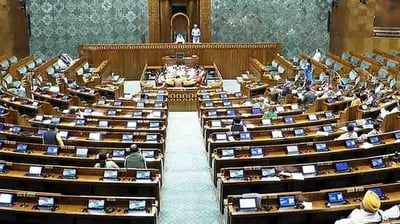
High stakes political drama and crucial policy decisions dominated the halls of Sansad Bhavan during the ongoing summer proceedings. On 4 August 2026, the 12th day of the parliamentary gathering witnessed significant legislative momentum despite persistent opposition demonstrations that led to 2 separate adjournments across both chambers. Lawmakers in the lower house cleared the important Appropriation No 3 Bill of 2026 through a swift voice vote. This central financial measure formally grants the executive branch constitutional authority to draw necessary funds from the Consolidated Fund of India to cover excess operational expenditure incurred across various public services. Union Finance Minister Nirmala Sitharaman also introduced the Taxation and Other Laws Amendment Bill of 2026 to update existing provisions within the Income Tax Act, Payment and Settlement Systems Act, and recent finance regulations. The financial approval ensures uninterrupted governance operations and seamless implementation of central welfare programs across all 28 states and 8 union territories.
Simultaneously, the upper house accomplished a major policy milestone by passing the Registration of Births and Deaths Amendment Bill of 2026. Having already received approval from the lower house on 31 July 2026, this landmark reform introduces a structured 2 tier verification system to modernize vital demographic records across the country. Under the new statutory provisions explaining delayed record entries, any request submitted between 1 year and 2 years after an event will continue to require official sanction from a District Magistrate, Sub Divisional Magistrate, or designated Executive Magistrate. However, for registrations delayed beyond 2 years, approval authority shifts completely from executive officers to a Judicial Magistrate of the First Class. Minister of State for Home Affairs Nityanand Rai explained during his address that placing ultra delayed registrations under direct judicial oversight will effectively eliminate fake identity certificates, prevent fraudulent record creation, and strengthen the integrity of the national population database.
The technical efficiency in clearing these 2 bills stands in sharp contrast to the stormy environment inside the legislative chambers throughout the session. When proceedings commenced at 11 AM on 4 August 2026, opposition members immediately gathered in the central aisle demanding a direct statement from Union Home Minister Amit Shah regarding police action against student demonstrations in the capital. Opposition leader Mallikarjun Kharge insisted that open debate on student welfare and administrative transparency must take precedence before routine business. Speaker Om Birla was forced to suspend morning discussions until 2 PM as continuous slogans disrupted standard question hour activities. Similar disruptions unfolded in the upper house, where Deputy Chairman Harivansh Narayan Singh conducted the voice vote on the civil registration bill while opposition leaders maintained vocal protests near the podium. Despite the noisy environment, government ministers successfully navigated the agenda to secure statutory passage for both items before both houses adjourned at 3 PM to reconvene on 5 August 2026 at 11 AM.
A closer look at these legislative developments reveals important structural changes in how the country manages public finances and legal documentation. Passing financial bills without extended debate allows the government to meet its fiscal commitments efficiently, yet reduced parliamentary discussion on budget allocations can limit detailed public scrutiny of administrative spending choices. On the regulatory side, transferring late civil record approvals to first class judicial magistrates creates a robust safeguard against paper fraud and illegal identity manipulation. While this legal shift protects vital demographic statistics, citizens in remote rural regions may face higher procedural hurdles and longer waiting periods when dealing with court formalities for old family records. Balancing administrative efficiency with grassroots accessibility will determine how effectively these newly enacted reforms serve ordinary families across the nation.
The overall proceedings of day 12 highlight a recurring dynamic in modern parliamentary functioning where essential legislative work moves forward alongside strong political disagreements. The successful passage of both the financial appropriation measure and the civil registration reform demonstrates the government capability to deliver on core governance targets even during volatile house sessions. As the parliamentary session moves into its 3rd week, attention now turns to upcoming discussions on economic policies, judicial strength, and taxation reforms scheduled for consideration. The ability of both ruling and opposition parties to balance intense political debates with constructive legislative dialogue remains essential for maintaining public confidence in national democratic institutions.