
PM Modi Appeals To Public To Cut Fuel Use While Fighter Jets Fly Over Temples And BJP Leaders Flaunt 700 Car Convoys
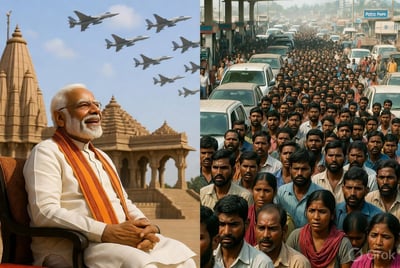
India is currently caught in a sharp debate over national sacrifice versus political privilege. Prime Minister Narendra Modi recently addressed the nation with a serious request asking every citizen to minimize their fuel consumption. He pointed toward global instability and the rising cost of oil imports as a reason for every Indian to switch to public transport or electric vehicles. This call for austerity was framed as a patriotic duty to protect the national treasury. However this message has been met with significant skepticism as the public watches the daily habits of the political class. In Bihar Chief Minister Samrat Choudhary continues to move with a massive convoy of over 20 vehicles. Even as the government tells the common man to carpool or take the bus the sight of dozens of fuel guzzling SUVs clearing the roads for a single leader creates a visible gap between the government’s words and its actions.
The controversy reached a boiling point in Madhya Pradesh where the scale of fuel consumption for political optics reached an almost unbelievable level. A prominent BJP leader was recently seen leading a motorcade of approximately 700 cars during a regional event. This massive show of strength used more fuel in a single afternoon than thousands of middle class families use in a month. This incident has become a symbol of what many call the VVIP disconnect. While the Prime Minister highlights the need to save every drop of petrol to keep the economy afloat his own party colleagues are seen engaging in extravagant displays of power that appear to ignore the national interest. Such a massive convoy does more than just burn fuel it burns the trust of the public who are being told to tighten their belts while the leaders expand their motorcades.
Further complicating the narrative is the recent use of Indian Air Force fighter jets for a religious celebration at the Somnath Temple. The Suryakiran aerobatic team performed high speed maneuvers and showered flower petals as part of the temple festivities. While these displays are meant to evoke pride and celebrate tradition they come at a staggering cost in terms of aviation fuel. Critics argue that using sophisticated defense machinery for religious ceremonies is a contradiction when the Prime Minister is simultaneously warning the country about a fuel crisis. If the nation is truly in a position where citizens must change their lifestyle to save fuel it raises the question of why high consumption military assets are being used for non essential ceremonial purposes. It suggests a hierarchy of importance where religious and political optics take precedence over the very conservation efforts the Prime Minister is promoting.
This situation reveals a deep rooted challenge in Indian governance where the burden of economic crisis is often shifted onto the shoulders of the general public. For a conservation drive to be successful there must be a sense of shared responsibility. When people see 700 cars in a single convoy or fighter jets flying for a temple show while they are being asked to cut back on their daily commute the message of the Prime Minister loses its moral authority. To bridge this divide leadership must be demonstrated through visible change in the halls of power. If the government wants the public to believe that fuel saving is a national emergency then the first step should be a mandatory reduction in political convoys and a pause on fuel intensive ceremonial displays. True patriotism in an era of economic hardship should be measured by the restraint shown by those at the top rather than the sacrifices demanded from the bottom.