
PM Repeats Don’t Buy Gold: Will Modi Govt Start Second Lockdown Soon?
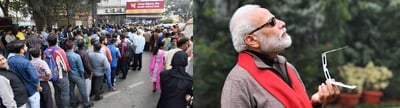
The Prime Minister’s recent address in Vadodara has sparked a nationwide debate on the economic reality of the "Aatmanirbhar" mission. PM Modi reiterated his call for citizens to practice austerity, specifically urging a reduction in petrol and diesel consumption and a complete deferment of gold purchases for at least a year. Citing the ongoing West Asia crisis as a threat to foreign currency reserves, the PM suggested that every gram of gold imported weakens the national economy. He even advocated for a return to the pandemic-era "Work from Home" model to cut down on transportation costs. While the rhetoric of patriotism through saving is strong, the ground reality for the average Indian is far more grim. For the majority of the population, the question is not whether to defer buying gold, but how to afford basic necessities in an era where their purchasing power has been systematically dismantled.
Evidence of this economic helplessness is found in the latest "World Inequality Report 2026," which reveals that India has become one of the most unequal countries in the world. The report highlights that the top 1% of Indians now corner a staggering 40% of the national wealth, while the bottom 50% receive a mere 15% of the income. This extreme concentration of wealth, often referred to as the "Billionaire Raj," has occurred while the middle class is being hollowed out. Data indicates that the "middle class" is now trapped between stagnant salaries and rising indirect taxes like GST. A recent study by the National Institute of Public Finance and Policy (NIPFP) shows that the bottom 50% and the middle 30% of consumers now bear an equal and disproportionate burden of the GST, making it nearly impossible for them to save money.
The "poor class" has been pushed into a state of even greater desperation. While the government claims to have lifted millions out of poverty, the "Multidimensional Poverty Index" and labor reports show that the quality of life for the bottom half has stagnated. Unemployment remains a critical wound; as of March 2026, the all-India unemployment rate rose to 5.1%, with urban female joblessness reaching a worrying 9.0%. For a poor family, the "saving" the PM asks for is physically impossible because their entire income is consumed by food and fuel inflation. The price of essential goods has risen faster than wages for over a decade, meaning that for the poor, every day is a battle for survival. The claim that the government is "saving" the economy feels hollow when the evidence suggests that the "ego" of maintaining a high-growth GDP narrative only benefits a few "National Champions" at the top.
Ultimately, the call to save fuel and stop buying gold is a luxury that only the rich can afford to consider. The middle and poor classes are already living in a state of forced austerity, not by choice, but by helplessness. The conclusion of this economic phase suggests that the current policies have created a lopsided structure where the wealth of a few billionaires equals the combined wealth of hundreds of millions of citizens. If the government continues to ask the helpless to tighten their belts while the ultra-wealthy escape progressive taxation, the social contract may reach a breaking point. The focus must shift from asking the poor to sacrifice to addressing the systemic inequality that has made luxury items like gold a distant, impossible dream for the very people who build the nation.