
Uday Kotak Warn Indian Economy in Grave Danger with Upcoming Threats and Middle Class Helplessness ?
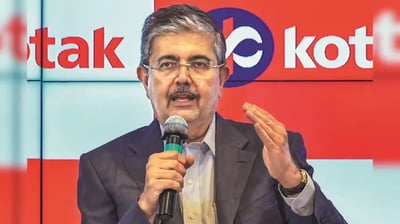
The Indian economy is currently navigating a treacherous path between "hope and despair" as the ripple effects of the Iran-US conflict hit domestic shores in May 2026. Banking legend Uday Kotak, while addressing the CII Annual Business Summit, provided a stark perspective on the nation's troubles, urging businesses to adopt a state of "strategic paranoia" to survive the upcoming volatility. This warning is not isolated; Prime Minister Narendra Modi has also signaled an upcoming period of extreme economic danger. The proof of this impending crisis lies in the PM’s recent and urgent calls for national austerity. Modi has explicitly urged citizens to stop purchasing gold for at least a year and to drastically cut fuel consumption. These directives serve as a formal admission from the highest office that India's foreign exchange reserves and fiscal health are under unprecedented pressure, requiring "wartime" conservation efforts from the public.
However, a deep analysis of these warnings reveals a painful contradiction for the common man. While the leadership prepares for "upcoming danger," the middle and poor classes have already been living in a state of economic catastrophe for years. Under the current regime's policies, the middle class has been systematically pushed into a corner. Evidence from the latest World Inequality Report shows that the top 1% of the population now corners 40% of the national wealth, leaving the rest to scramble for scraps. The "middle class" is now a hollowed-out demographic, struggling with stagnant wages that have not kept pace with the 7.5% inflation rate. For these families, the PM’s call to avoid gold is an unintentional irony—they have already lost the capacity to buy expensive assets because their savings have been depleted by rising indirect taxes and high costs of essential services like education and healthcare.
The plight of the poor class is even more dire, as they have shifted from being "poor" to "helplessly destitute." Data from the 2026 Labor Bureau indicates that youth unemployment remains at a staggering 15%, leaving many households without a single stable income. When the government suggests "Work from Home" to save fuel, it ignores the millions of laborers and service workers whose jobs require physical presence and who are already spending 30% of their daily earnings just on commuting. The proof of the "upcoming danger" Modi speaks of is already visible in the empty pockets of the rural poor. The "ego" of maintaining a high-growth GDP narrative has effectively masked a reality where the bottom 50% of Indians hold only a fraction of the nation's assets. This structural imbalance means that any new global shock, like the Iran war, will hit the most vulnerable with maximum force.
Ultimately, the warnings from both the Prime Minister and the financial elite serve as a late realization of a crisis the public has felt for a long time. The conclusion of this economic evaluation suggests that India is entering a phase where the "Aatmanirbhar" dream is being tested by the reality of a shrinking middle class and a desperate poor class. If the government continues to demand sacrifices from the helpless while the billionaire class expands its fortunes through corporate-friendly policies, the social contract risks a total breakdown. The upcoming danger is not just an external war, but an internal economic fracture that has made luxury items like gold a relic of the past for the average citizen. The focus must now shift from mere warnings to a radical redistribution of resources to ensure that the nation's "danger" does not become its permanent downfall.