
Rahul Gandhi Prediction True As US Drops Adani Fraud Case Sparks Massive Modani Collision Controversy
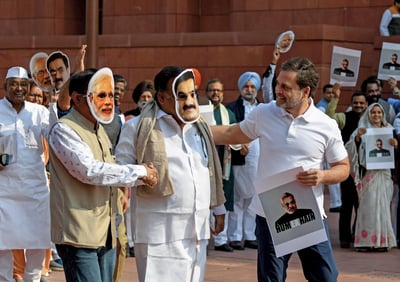
The political landscape in India has been set ablaze following the stunning announcement that the United States Department of Justice has officially moved to drop all criminal fraud and conspiracy charges against billionaire industrialist Gautam Adani. This dramatic legal retreat by American federal prosecutors comes just days after the US Securities and Exchange Commission settled its civil dispute with the tycoon. Almost immediately after the news broke, Leader of Opposition Rahul Gandhi launched a blistering offensive against Prime Minister Narendra Modi, claiming that his long standing predictions about the case have come completely true. The Congress party has aggressively revived the Modani collusion narrative, arguing that the sudden dismissal of high profile international corruption charges points directly to a compromised leadership that has placed corporate interests ahead of national welfare.
From a broader perspective, the sudden shutdown of this international legal battle raises massive questions about how global corporate diplomacy intersects with sovereign political power. Legal documents show that the American government chose to exercise its prosecutorial discretion to permanently dismiss the indictment with prejudice, meaning these specific criminal charges cannot be reopened. The official filing was notably signed by top tier political appointees rather than the local line prosecutors who spent years building the bribery case, a detail that heavily hints at a top down administrative shift rather than an objective legal conclusion. Rahul Gandhi and senior opposition leaders have pointed out that this legal relief follows private high level meetings between Adani's top defense attorneys and Washington officials. During these discussions, the billionaire’s legal team reportedly made it clear that the pending criminal case was single handedly blocking a massive ten billion dollar investment pledge and fifteen thousand promised jobs within the United States.
The opposition argument deepens significantly as they connect this legal outcome to recent controversial decisions made by the Indian government on the global stage. Critics are highlighting that the relief given to the billionaire coincides with India agreeing to a highly criticized, one sided trade pact with America that many experts believe favors overseas interests over domestic Indian sectors. Furthermore, senior political figures have alleged that the Prime Minister abruptly halted strategic national security programs, such as Operation Sindoor, under direct pressure and economic threats from the newly established administration in Washington. By framing the entire sequence of events as a massive geopolitical transaction, the opposition is painting a picture of an Indian administration willing to make substantial policy concessions, halt sensitive sovereign operations, and sacrifice local resources simply to secure legal immunity for a favored business empire on foreign soil.
Ultimately, the resolution of this multi billion dollar legal saga illustrates a shifting global environment where massive financial commitments can effectively reorder justice priorities. While the Adani Group has consistently denied all allegations of wrongdoing, the company simultaneously agreed to pay a massive two hundred and seventy five million dollar civil penalty to the US Treasury to resolve a completely separate probe into alleged violations of Iran sanctions. This combination of multi million dollar financial payouts, strategic investment promises, and sudden policy shifts suggests that the global corporate arena is increasingly governed by economic transactionalism rather than rigid legal enforcement. As the political crossfire intensifies across India, this development leaves the public to weigh a difficult choice. One side views the dismissal as a complete vindication that frees a vital national infrastructure giant to expand globally, while the other side interprets it as a troubling template where national policy and sovereign interests are effectively bargained away to shield private wealth from international accountability.