
Rare Himalayan Alpine Flower Cyananthus Hookeri Found in Arunachal Pradesh After 158 Years of Silence
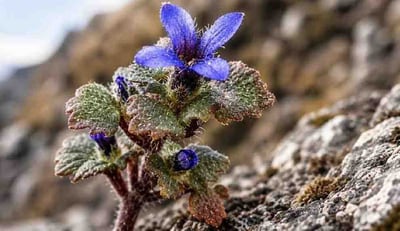
The scientific community is celebrating a monumental botanical breakthrough in the remote high altitude landscapes of Northeast India. A dedicated research team from the Botanical Survey of India officially identified and recorded a population of Cyananthus hookeri a remarkably rare Himalayan alpine flower that had completely vanished from the national scientific ledger. The elusive floral species was tracked down at an extreme altitude of 3600 meters inside the beautiful Chuna Valley located near Mago village in the Tawang district of Arunachal Pradesh. This dramatic encounter successfully concludes a long 158 year period of absolute evolutionary silence since the delicate plant was last documented on Indian soil during the British colonial era. The formal field details of this successful scientific expedition have been officially published in Oryx an international conservation journal published by the Cambridge University Press validating the immense ecological worth of the Eastern Himalayas.
To put this historic milestone into clear perspective the tiny purple blue plant holds an incredibly deep connection to the foundational roots of global modern botany. The species was originally collected in India back in 1867 within the state of Sikkim by the legendary British botanist and explorer Sir Joseph Dalton Hooker who traveled extensively through the region to catalog rare Asian flora. Following that initial 19th century documentation the dwarf bellflower family member eluded dozens of subsequent botanical tracking teams across generations leading many scholars to assume it had gone locally extinct within Indian borders. The July 2026 announcement not only revives a long lost piece of colonial environmental history but also marks the first confirmed geographical record of Cyananthus hookeri inside Arunachal Pradesh. This spatial expansion proves that the complex mountain ecosystems of the state contain critical microclimates capable of harboring ancient sensitive species that have completely disappeared from other parts of the world.
While the return of this beautiful blue bellflower is an undeniable triumph for local researchers a closer look at the field data reveals an incredibly fragile survival situation on the ground. During their extensive tracking operation across the rocky alpine meadows scientists Subhajit Lahiri Monalisa Das and Sudhansu Sekhar Dash were able to count fewer than 50 mature individual plants in the wild. This incredibly low population density indicates that the species is currently teetering on the absolute edge of regional extinction due to a dangerously restricted gene pool. The fact that this plant survives only within a highly specialized ecological niche means that even minor environmental shifts can wipe out the remaining population. Furthermore the geographic location of the discovery near heavily guarded border zones introduces unique conservation challenges because essential infrastructure developments and border road constructions could inadvertently destroy the final remaining habitat before protective measures are established.
The critical long term lesson of this 158 year disappearance emphasizes that the vast high altitude frontiers of India are facing unprecedented ecological dangers from global climate change. Rising regional temperatures are rapidly shifting alpine tree lines upward forcing delicate low growing herbs like Cyananthus hookeri to compete with aggressive sub alpine shrubs for survival. Because of these pressing environmental realities the Botanical Survey of India has formally recommended that the plant be classified as Endangered at the national level under the strict framework of the International Union for Conservation of Nature Red List. Government agencies must immediately coordinate with local tribal communities in Tawang to establish strict micro sanctuaries and initiate advanced seed banking programs to safeguard these 50 remaining plants. Protecting this newly recovered botanical treasure is not merely about saving a single flower but rather about preserving the complex evolutionary history of a fragile global biodiversity hotspot.